
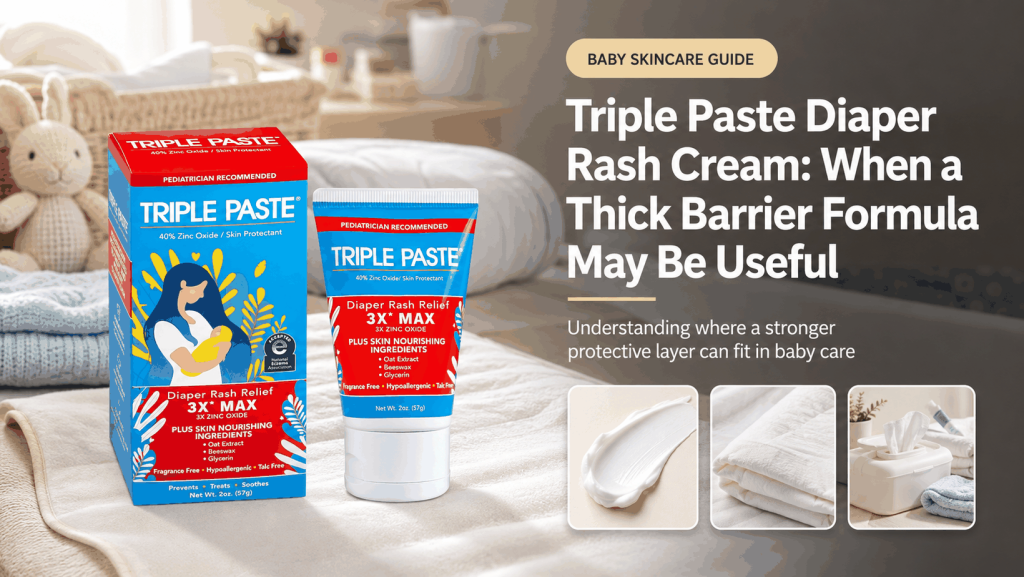
Triple Paste Diaper Rash Cream is the product at the center of this guide. Triple Paste Original All-in-One is a thick diaper-rash ointment with 12.8% zinc oxide. Its current formula also lists white petrolatum, corn starch, lanolin, beeswax, glycerin, and oat extract, creating a dense barrier intended for daily protection and mild-to-moderate rash. The goal is not to label one formula as perfect for every baby, but to help parents compare ingredients, texture, routine fit, and signs that a product should be stopped.
It is most useful when parents want a paste that stays in place through longer wetness exposure, friction, or overnight wear. The dense texture is less convenient when the goal is a quick, very light barrier. Start with a small amount, keep the rest of the routine stable, and judge the baby’s skin over repeated use rather than one application.
Triple Paste Diaper Rash Cream: How The Barrier Formula Works
Zinc oxide provides the active skin-protectant function, while petrolatum and waxes contribute to the paste’s occlusive feel. That combination explains why the product remains visible and resists wiping away more than a light cream.
The official page confirms the current 12.8% zinc oxide level and the ingredients that give this thick zinc diaper paste its dense barrier texture.
Texture And Staying Power
The formula contains lanolin, so families with a known lanolin sensitivity should read the label carefully. No “hypoallergenic” claim can eliminate the possibility of an individual reaction.
The internal listing helps you compare this stubborn diaper rash barrier with the exact package and current availability.
Apply to clean, dry skin and use enough to create a continuous barrier where the diaper contacts the skin. At the next change, remove contamination gently instead of scrubbing until every trace of paste disappears.
An overnight diaper protection cream is most useful after the skin is gently cleaned and dried, because occlusion works best when fresh moisture is not trapped underneath.
Use It Inside A Complete Diaper-Change Routine
Change wet or soiled diapers promptly, cleanse gently, and allow the skin to dry before adding a barrier. A visible continuous layer is useful where the diaper contacts the skin, but there is no benefit in aggressive rubbing at the next change.
When comparing a heavy-duty baby bottom cream, look at zinc percentage, texture, ingredient sensitivities, and cleanup rather than choosing only by thickness.
At bedtime or during longer stretches between changes, barrier persistence becomes more important. If the rash is mild, keep the routine simple and observe whether redness is actually improving from day to day.
A moisture and friction shield supports the skin barrier, but prompt diaper changes and reduced rubbing remain core parts of diaper-rash care.
What Parents Should Compare Before Buying
Read the current package instead of relying on an old marketplace description. Formulas, fragrance choices, active ingredients, age directions, and warnings can change. Compare the complete label with the job you want the product to do.
| Decision Point | Current Position | Why It Matters |
|---|---|---|
| Active ingredient | Zinc oxide 12.8% | Skin-protectant barrier |
| Texture | Thick paste | Good staying power |
| Notable base ingredients | Petrolatum, starch, lanolin, beeswax | Check sensitivities |
| Best fit | Longer wear or mild-moderate irritation | Not a substitute for medical care |
Useful diaper paste application tips include applying to clean, dry skin and removing only contaminated paste gently at the next change.
For Triple Paste Diaper Rash Cream, the most useful question is whether the formula solves a real routine problem without adding unnecessary steps. A product that is easy to apply, easy to stop, and easy to evaluate is often more practical than a complicated routine built around marketing claims.
A Practical First-Use Checklist
- Confirm the exact product, variant, age guidance, ingredient list, and warnings on the package.
- Introduce Triple Paste Diaper Rash Cream without adding another new skincare product on the same day.
- Use a small amount on a limited area first when the child has sensitive or reactive skin.
- Follow the label for rinse-off versus leave-on use and keep products away from the eyes and mouth unless specifically intended there.
- Check the skin again later the same day and over the next several uses for redness, dryness, swelling, or discomfort.
- Stop and seek professional guidance when symptoms are severe, persistent, infected-looking, or associated with a baby who seems unwell.
Write down the date the product was started and keep the bottle or package until you know it is tolerated. This simple habit makes it easier to identify the likely trigger if several caregivers share the routine.
How To Decide If Triple Paste Diaper Rash Cream Fits Your Routine
Choose Triple Paste when you need a denser zinc oxide barrier with longer staying power. If the baby only needs routine prevention and cleanup is becoming difficult, compare a lighter cream rather than assuming more thickness is always better.
Use the product according to its current label, observe the skin rather than the marketing, and keep the surrounding routine simple. That approach gives parents a clearer answer about whether Triple Paste Diaper Rash Cream is comfortable and useful for their own baby.
Frequently Asked Questions
How much zinc oxide is in Triple Paste Original?
The current Original All-in-One formula contains 12.8% zinc oxide.
Why is Triple Paste so thick?
Its zinc oxide plus petrolatum, waxes, starch, and other base ingredients create a dense barrier that stays on the skin longer than many light creams.
Does Triple Paste contain lanolin?
The current ingredient list includes anhydrous lanolin. Families with a known sensitivity should check the package carefully.
Can I use it overnight?
The manufacturer directions include use at bedtime or when exposure to a wet diaper may be prolonged.
When is a diaper rash too severe for home care?
Seek medical advice for severe pain, fever, blisters, pus, spreading rash, or a rash that is not improving with appropriate care.
