
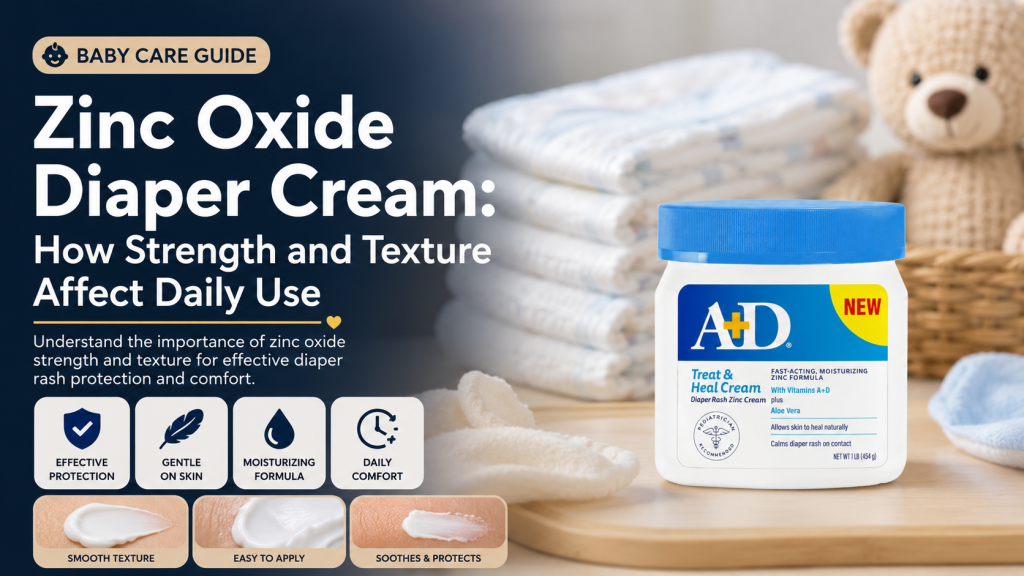
Zinc oxide diaper cream creates a physical barrier between skin and moisture, but the percentage on the label does not tell parents everything about daily use. A lower-strength cream may spread easily for routine protection, while a dense high-zinc paste can stay in place longer and require more careful removal.
The right texture depends on the condition of the skin, diaper-change frequency, climate, and healthcare guidance. Cream should be applied to clean, dry skin according to the label. A severe, spreading, blistered, bleeding, or persistent rash needs medical assessment rather than a thicker layer of product.
How Zinc Oxide Diaper Cream Strength Changes Use
Zinc oxide is an active skin protectant in many over-the-counter diaper products. Higher percentages often create a more opaque and persistent barrier, but formulation ingredients determine spread, adhesion, and cleanup. Two products with the same zinc percentage can feel very different.
Routine prevention and treatment of an active rash are not identical goals. Parents should follow the exact label and pediatric advice, keep changes frequent, and avoid scrubbing away every trace of cream when the product directions allow a protective layer to remain.
Strength, Spread, And Removal Factors
A practical product balances protective coverage with gentle application and cleanup.
Zinc Percentage In Context
The percentage indicates the amount of active zinc oxide, not the total protective performance. Waxes, petrolatum, oils, and thickeners also influence how the product behaves.
Use the lowest level that meets the intended need and follow the label. More active ingredient does not justify overapplication.
Paste Versus Cream Texture
A paste is thick and opaque, while a cream may spread faster and feel lighter. Dense products can be useful overnight or with frequent stools but may be inconvenient for every change.
Warm a small amount between clean fingers and press gently rather than rubbing inflamed skin.
Adhesion And Diaper Friction
A good barrier stays on the skin despite movement without forming hard clumps. Too much product can collect in folds and make inspection difficult.
Use enough to cover the exposed area, keep it out of internal genital tissue, and check folds at each change.
Fragrance And Added Botanicals
Fragrance, essential oils, and numerous botanical extracts are not required for zinc oxide to work as a barrier. They add variables for sensitive skin.
Choose a simpler fragrance-free formula when irritation or allergy is a concern.
Removal Without Scrubbing
Thick zinc paste can resist water. Repeated forceful wiping can damage already irritated skin.
Use the manufacturer’s removal advice, gentle water or a suitable cleanser, and soft patting. It may be acceptable to leave a clean thin layer between changes when directed.
Compare Barrier Products By The Situation
A diaper barrier cream for routine use should spread easily enough that caregivers can apply a thin layer without dragging the skin.
The FDA rulemaking history provides regulatory context for a zinc percentage guide and other over-the-counter skin protectant ingredients.
A thick diaper cream can provide a persistent barrier but should not be scrubbed off aggressively at every change.
A guide to daily rash prevention helps parents combine barrier products with frequent changes, gentle cleaning, and time for the skin to dry.
A protective baby ointment may use a different active or occlusive system, so it should be compared by label rather than assumed equivalent to zinc paste.
NHS guidance on diaper change essentials supports frequent changing, gentle cleaning, and safe preparation of the changing area.
Zinc Texture And Routine Match
The table describes common practical differences. The exact label and healthcare advice remain the final guide.
| Product Style | Typical Advantage | Practical Trade-Off |
|---|---|---|
| Light zinc cream | Fast spreading for routine changes | May rub away sooner |
| Medium barrier cream | Balanced coverage and cleanup | Can collect in folds if overused |
| High-zinc paste | Strong visible moisture barrier | More difficult to remove |
| Petrolatum ointment | Smooth occlusive film | May not contain zinc oxide |
| Spray barrier | Reduced finger contact | Needs careful aim and inhalation precautions |
Apply Zinc Cream With Less Friction
A clean, dry surface and a small amount usually create a better barrier than repeated thick layering.
- Wash caregiver hands and prepare supplies before opening the diaper.
- Clean gently using the method recommended for the baby and product.
- Pat or air-dry the area instead of rubbing.
- Apply a thin, even layer to exposed external skin.
- Avoid internal genital areas and keep the product away from the baby’s mouth.
- Close the container, wash hands, and inspect the skin at the next change.
When a clean layer remains, follow the label before removing it completely. Adding a little fresh product over an intact barrier may reduce wiping, but only when the product instructions allow it.
Choose The Barrier You Can Apply Gently
Zinc oxide diaper cream should be selected by percentage, texture, persistence, fragrance, and cleanup—not by strength alone. A smooth daily cream and a dense paste serve different routines.
Frequent changes, gentle cleaning, drying, and careful inspection remain essential. When a rash is severe or persistent, professional diagnosis matters more than increasing zinc concentration.
Frequently Asked Questions
Is higher zinc oxide always better?
No. Higher zinc often makes a thicker barrier, but routine needs, skin condition, spread, and label directions matter.
Should zinc cream be removed at every diaper change?
Follow the product directions. Aggressive removal can irritate skin, and some clean barrier may be left in place when advised.
Can zinc oxide cream be used every day?
Many products are intended for routine protection, but use the label, apply a thin layer, and seek advice if irritation develops.
Why does zinc cream look white on the skin?
Zinc oxide is an opaque mineral. A visible white film is common, especially with higher-strength pastes.
Can diaper cream go inside the genital area?
Apply only to external skin as directed. Keep products away from internal tissue and the baby’s mouth.
