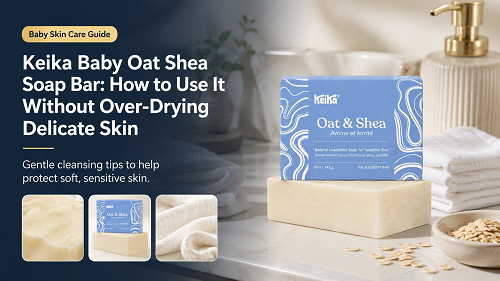
Keika Baby Oat Shea Soap Bar is the product at the center of this guide. Keika’s Oat & Shea Bar is an unscented soap made from saponified palm and coconut oils with glycerin, oat kernel flour, jojoba oil, shea butter, olive oil, salt, and citric acid. The manufacturer specifically notes that the bar is for external use and is not tear-free. The goal is not to label one formula as perfect for every baby, but to help parents compare ingredients, texture, routine fit, and signs that a product should be stopped.
It may suit families who prefer a solid unscented cleanser and whose child tolerates true soap bars. Use it sparingly and rinse well, because delicate or eczema-prone skin can become dry with bar soap even when the formula contains emollient ingredients. Start with a small amount, keep the rest of the routine stable, and judge the baby’s skin over repeated use rather than one application.
Keika Baby Oat Shea Soap Bar: What The Cleanser Is Designed To Do
Saponified oils make this a true soap bar rather than a syndet liquid wash. That affects cleansing strength and skin feel, so parents should compare post-bath comfort rather than assuming oat and shea automatically make the cleanser non-drying.
The official page lists the current ingredients and clearly states that this oat and shea baby soap is for external use and is not tear-free.
Texture, Fragrance, And Rinse-Off Performance
The bar is unscented, which removes added fragrance from the equation. Still, a child can react to other ingredients, and a patch test or limited first use can make tolerance easier to judge.
The internal listing helps you compare this baby cleansing bar for delicate skin with the exact product being offered on the site.
Keep the bar dry between uses so it does not become soft or contaminated in standing bath water. Lather it in adult hands first instead of rubbing a hard bar directly across delicate skin.
A low-irritation bath bar should be compared with a liquid baby wash because true soap and syndet cleansers can feel very different after rinsing.
Build A Short, Gentle Bath Routine
Wet the skin with comfortably lukewarm water, use the smallest useful amount of cleanser, and focus on areas that are visibly dirty, sweaty, or exposed to stool, food, sunscreen, or saliva. Avoid vigorous scrubbing and rinse until the skin no longer feels slippery.
Useful soap bar bathing tips for infants include short lukewarm baths, minimal rubbing, and moisturizer after bathing when the skin is dry.
Pat rather than rub with a soft towel. When the skin is dry or eczema-prone, apply an appropriate fragrance-free moisturizer soon after bathing. Product choice matters, but duration, water temperature, friction, and after-bath care often decide whether a routine feels comfortable.
A gentle lather for baby skin should rinse clean without leaving the skin tight; more foam does not make the bath safer or more effective.
What Parents Should Compare Before Buying
Read the current package instead of relying on an old marketplace description. Formulas, fragrance choices, active ingredients, age directions, and warnings can change. Compare the complete label with the job you want the product to do.
| Decision Point | Current Position | Why It Matters |
|---|---|---|
| Format | True soap bar | Different from liquid syndet wash |
| Fragrance | Unscented | Still evaluate other ingredients |
| Notable ingredients | Oat, shea, jojoba, olive oil | Complete formula matters |
| Eye safety | Not tear-free | Keep away from face and eyes |
A solid baby cleanser guide is easier to evaluate when you compare it with other cleanser formats and keep the rest of the bath routine unchanged.
For Keika Baby Oat Shea Soap Bar, the most useful question is whether the formula solves a real routine problem without adding unnecessary steps. A product that is easy to apply, easy to stop, and easy to evaluate is often more practical than a complicated routine built around marketing claims.
A Practical First-Use Checklist
- Confirm the exact product, variant, age guidance, ingredient list, and warnings on the package.
- Introduce Keika Baby Oat Shea Soap Bar without adding another new skincare product on the same day.
- Use a small amount on a limited area first when the child has sensitive or reactive skin.
- Follow the label for rinse-off versus leave-on use and keep products away from the eyes and mouth unless specifically intended there.
- Check the skin again later the same day and over the next several uses for redness, dryness, swelling, or discomfort.
- Stop and seek professional guidance when symptoms are severe, persistent, infected-looking, or associated with a baby who seems unwell.
Write down the date the product was started and keep the bottle or package until you know it is tolerated. This simple habit makes it easier to identify the likely trigger if several caregivers share the routine.
How To Decide If Keika Baby Oat Shea Soap Bar Fits Your Routine
Choose the Keika bar when you specifically want a solid unscented soap and the baby’s skin tolerates it. Use less, keep baths brief, avoid the face and eyes, and change to a milder liquid cleanser if dryness increases.
Use the product according to its current label, observe the skin rather than the marketing, and keep the surrounding routine simple. That approach gives parents a clearer answer about whether Keika Baby Oat Shea Soap Bar is comfortable and useful for their own baby.
Frequently Asked Questions
Is Keika Oat & Shea Bar tear-free?
No. The manufacturer states that the product is not tear-free. Keep it away from the eyes and face.
Is the bar fragrance-free?
The Oat & Shea Bar is described as unscented and made without artificial fragrance.
Can bar soap dry baby skin?
Yes. True soap can feel drying on some delicate or eczema-prone skin. Use a small amount, keep baths short, and switch products if tightness or irritation increases.
Should I rub the bar directly on baby skin?
It is gentler to lather a small amount in adult hands and wash with the hands rather than rubbing a hard bar directly on delicate skin.
What if my baby has eczema?
Eczema-prone skin often benefits from mild fragrance-free cleansers and regular moisturizer. Ask a pediatrician or dermatologist which cleanser format fits the child’s treatment plan.
