
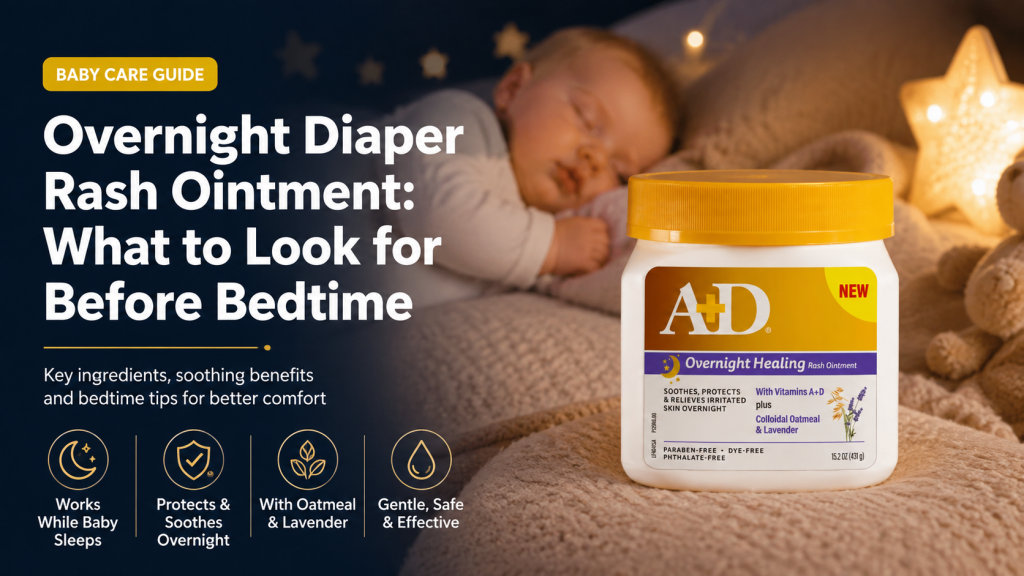
An overnight diaper rash ointment is designed to remain on the skin through a longer sleep interval, but it cannot compensate for a soiled diaper, incorrect diaper fit, or a rash that needs medical treatment. The product should create a comfortable barrier without requiring forceful removal the next morning.
Parents should compare active ingredients, thickness, fragrance, package directions, and how often the baby normally wakes for feeding or changing. Overnight does not mean the diaper should be ignored until morning when it is soiled or leaking.
What Makes An Overnight Diaper Rash Ointment Last
Occlusive ingredients such as petrolatum, waxes, and zinc oxide help reduce contact between skin and moisture. A thicker formula often stays visible longer, but a smooth, even layer is more important than a mound of product that collects in folds.
Bedtime care should include a full skin check. If the rash is rapidly worsening, painful, blistered, bleeding, or spreading into folds, do not simply add a stronger ointment and wait overnight. Contact a healthcare professional.
Bedtime Barrier Features To Compare
The best overnight format combines persistence with gentle application and easy inspection at the next change.
Barrier Staying Power
A long-lasting product should resist moisture and friction without becoming hard or flaky. Zinc paste and petrolatum ointment create different types of film.
Check the skin at the next waking and note whether coverage remains even or has migrated into folds.
Thickness And Spread
Very dense paste can stay in place but may pull on sore skin. Smooth ointment glides more easily but may transfer to the diaper.
Warm a small amount in clean fingers and press it gently onto dry external skin.
Removal In The Morning
A product that needs scrubbing can worsen irritation. Some barrier can remain if it is clean and the directions allow layering.
Use gentle water, soft cloth, or the manufacturer’s recommended cleanser and pat dry.
Fragrance And Sensitizers
Nighttime products do not need perfume. Scented botanicals can remain against the skin for hours and add potential irritation.
Prefer a simple fragrance-free formula when the area is already inflamed.
Diaper Fit And Absorbency
Ointment cannot fix a diaper that is too tight, leaks, or keeps stool against the skin. Fit and prompt changing remain central.
Check waist and leg seals, use the correct size, and change when soiled even if the baby is asleep.
Build Bedtime Protection As A Complete Routine
A bedtime diaper barrier should spread gently and provide clear directions for the amount, body area, and frequency of use.
A long-lasting diaper cream can be compared by active ingredient and removal method rather than by thickness alone.
A thick baby ointment may rely on a different protective system from zinc paste, so read the active ingredient panel carefully.
HealthyChildren guidance on overnight moisture protection emphasizes frequent changing, gentle cleaning, air drying, and barrier protection.
A broader plan for diaper rash prevention should avoid unproven home mixtures and focus on reducing moisture, friction, and irritants.
A nighttime diaper care guide can help parents compare cream, paste, ointment, and spray formats before building a bedtime routine.
Overnight Product Comparison
Choose the texture based on skin condition and ease of use, not only on how thick the product looks.
| Format | Bedtime Strength | Morning Consideration |
|---|---|---|
| Petrolatum ointment | Smooth water-resistant film | May transfer but wipes gently |
| Moderate zinc cream | Visible barrier with easier spread | May need refreshing |
| High-zinc paste | Strong persistent coverage | Can require careful removal |
| Spray barrier | Low-friction application | Coverage may be thinner |
| No product | Suitable when skin is healthy and label/routine does not require it | Continue frequent checks and changes |
A Bedtime Diaper Barrier Sequence
Prepare supplies before undressing the baby and keep the changing surface safe throughout.
- Change the diaper immediately before the longest sleep period.
- Clean the external area gently and remove stool completely.
- Allow skin folds and surfaces to dry without rubbing.
- Apply a thin, even label-directed barrier layer.
- Fit a clean absorbent diaper without excessive tightness.
- Check and change promptly whenever the diaper is soiled or leaking.
In the morning, inspect the rash before applying more product. Document improvement or worsening so a pediatrician receives a clear timeline if advice is needed.
Pair A Persistent Barrier With Prompt Changes
An overnight diaper rash ointment should stay in place, apply gently, and come away without scrubbing. Stronger texture is helpful only when it fits the rash, diaper routine, and label directions.
Use a clean, dry surface, a correctly fitted diaper, and prompt changes. Never postpone medical assessment because a product is marketed for overnight protection.
Frequently Asked Questions
Should I apply a thick layer overnight?
Use the amount directed by the product. A thin even barrier may be enough, while some pastes call for more visible coverage.
Do I need to wake the baby for diaper changes?
Change promptly when the diaper is soiled or leaking. Ask the pediatrician for age-specific overnight guidance.
Can I leave old ointment on the skin?
When the remaining layer is clean and the label permits, gentle refreshing may reduce wiping. Remove stool and contaminated product completely.
Why is the rash worse in the morning?
Long moisture exposure, stool, friction, yeast, bacterial infection, or product irritation can contribute. Persistent worsening needs assessment.
Is petrolatum or zinc better overnight?
Both can form barriers. The best choice depends on the skin, product directions, and whether stronger visible coverage is needed.
