
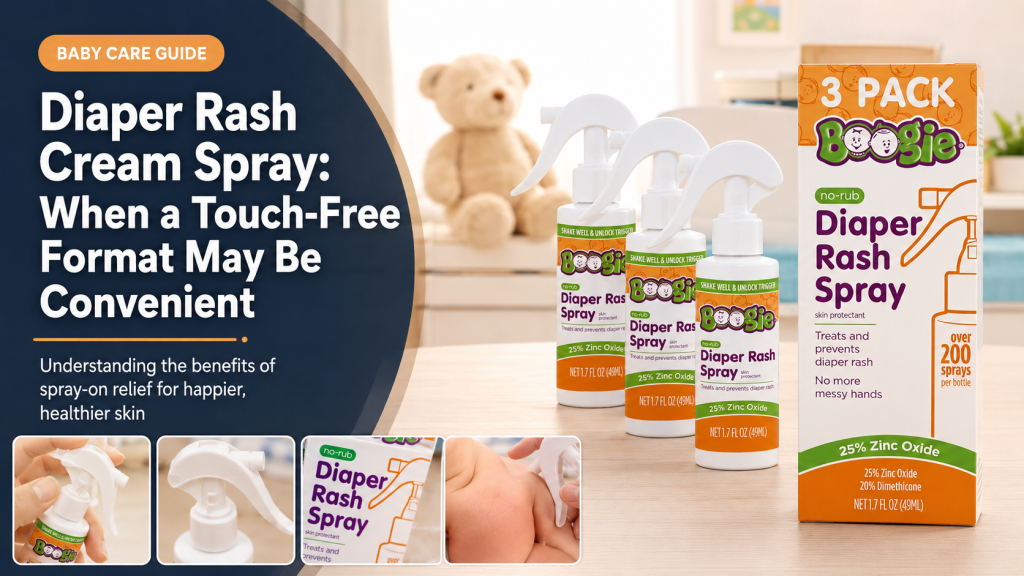
A diaper rash cream spray can reduce direct finger contact with sore skin and make on-the-go changes faster, but the spray format introduces different safety questions. Parents must control the direction, prevent inhalation, keep the product away from the face, and confirm that enough barrier reaches the intended external skin.
Some sprays use zinc oxide or another skin protectant, while others are cleansing or soothing mists rather than barrier creams. The word spray does not describe strength or purpose, so the active ingredients and directions need careful review.
When A Diaper Rash Cream Spray Fits The Routine
Spray formats can be useful when direct rubbing is uncomfortable, when a caregiver needs one-handed dispensing, or when the product is carried in a diaper bag. Convenience is meaningful only if the spray creates an even barrier and the caregiver can see where it landed.
The safest use occurs on a stable changing surface with the baby’s face turned away from the application direction. A spray should not be used in a confined space, around flames, or where siblings can access it. Aerosol and pump formats have different warnings.
Spray Design Details Parents Should Check
The actuator, active ingredient, spray distance, and lock mechanism determine whether the format is genuinely convenient.
Pump Spray Versus Aerosol
A mechanical pump usually creates larger droplets with less airborne mist than a pressurized aerosol, although every product differs.
Read inhalation and flammability warnings and choose a format that can be aimed close to the skin.
Coverage Pattern
A narrow, even spray helps caregivers cover the external diaper area without coating clothing or the changing surface.
Test the first spray onto a tissue away from the baby to understand direction and pressure when the label allows.
Active Ingredient And Strength
Zinc oxide sprays may deposit a thinner layer than paste. Other sprays may use different protectants or no barrier active at all.
Confirm whether the product is for prevention, treatment, cleansing, or soothing; do not substitute one purpose for another.
Locking And Leak Protection
A secure cap or twist lock prevents accidental discharge in a diaper bag. Residue around the nozzle can clog the pattern.
Wipe the nozzle exterior, engage the lock, and store upright according to directions.
Visibility Of The Applied Layer
A very transparent spray can make coverage hard to judge. An opaque product shows missed areas but may transfer to fabric.
Use only the label-directed amount and inspect the skin rather than repeatedly spraying to create a thick coat.
Decide Whether Spray Convenience Improves Care
A spray diaper cream should list its active ingredient and exact spray distance so parents can compare it with traditional cream.
A touch-free diaper care format can reduce rubbing, but the caregiver still needs to clean, dry, and inspect the skin at every change.
A portable rash cream may serve a different purpose from a zinc barrier, so verify whether it is a cleanser, soothing mist, or protective treatment.
A practical list of diaper bag essentials starts with clean supplies, a safe changing surface, frequent changes, and hand hygiene.
A zinc oxide spray can be compared with paste by percentage, visibility, persistence, and how much product actually reaches the skin.
Even during quick diaper changes the barrier product works best alongside gentle cleaning, drying, and prompt replacement of wet or soiled diapers.
Spray Versus Traditional Cream
Each format has advantages. Choose the one that allows safe, even, gentle application in the real changing setup.
| Feature | Spray Format | Cream Or Paste |
|---|---|---|
| Finger contact | Lower during application | Usually applied by hand or tool |
| Coverage visibility | Varies by formula | Usually easy to see |
| Airborne exposure | Possible if mist is fine | Minimal |
| Travel storage | Needs lock and leak control | Needs secure cap |
| Barrier thickness | Often thin and even | Can build a thicker layer |
Use A Diaper Spray With Controlled Aim
Prepare the change before opening the product so the baby is never left unattended.
- Place the baby on a safe, stable changing surface.
- Clean gently and allow the external skin to dry.
- Turn the spray away from the face and test the actuator if directions permit.
- Hold it at the label-specified distance close to the intended area.
- Use the minimum number of sprays needed for even coverage.
- Lock the nozzle, wipe overspray, wash hands, and keep the product out of reach.
If the nozzle clogs or produces an unpredictable mist, stop using it until it can be cleaned exactly as the manufacturer directs. Never puncture or heat a pressurized container.
Choose Spray Only When It Improves Control
A diaper rash cream spray is convenient when the actuator is predictable, warnings are clear, and the product creates even coverage without becoming airborne. Touch-free application should reduce friction, not reduce careful inspection.
Keep a traditional cream available if the spray is difficult to aim or does not create enough barrier. The best format is the one caregivers can use safely and consistently.
Frequently Asked Questions
Is diaper rash spray as effective as cream?
It depends on the active ingredient, amount delivered, coverage, and intended use. Compare labels rather than formats alone.
Can I spray diaper cream directly on the baby?
Only as the exact product directs. Keep it close to the external skin and away from the face and inhalation path.
Is a pump spray safer than an aerosol?
A pump may create less fine mist, but every formula and nozzle differs. Follow the specific warnings and directions.
Can diaper spray be carried in a bag?
Yes when the container has a reliable lock, is stored as directed, and is protected from heat and puncture.
What if the spray nozzle is clogged?
Clean it only according to manufacturer directions. Do not use pins, heat, or force on a pressurized container.
