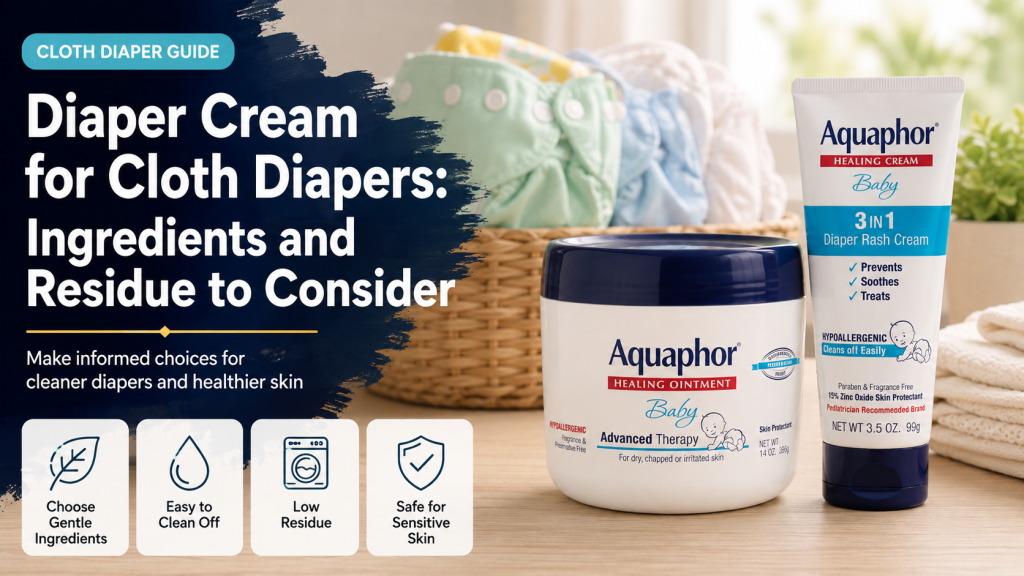
Diaper cream for cloth diapers must protect the baby’s skin without creating residue that reduces absorbency or becomes difficult to wash from reusable fabric. Compatibility depends on the cream, fibre, wash routine, water hardness, detergent, and whether a disposable or washable liner is used.
A product described as cloth-safe is not automatically residue-free, and zinc-free is not automatically better for every rash. Skin protection comes first. When a clinician recommends a specific barrier, parents can protect the diaper with a suitable liner and adjust laundering according to the diaper manufacturer.
What Makes Diaper Cream For Cloth Diapers Compatible
Cloth compatibility is a system, not a single ingredient rule. Natural fibres, synthetic stay-dry layers, fitted diapers, and covers behave differently. A cream that washes clean from cotton may coat a synthetic liner when the detergent dose or water temperature is insufficient.
Start with the diaper manufacturer’s guidance. Some brands allow most creams when a liner is used, while others recommend avoiding petrolatum or certain waxes. The cream label may also specify whether fabric staining is expected.
Ingredients And Laundry Factors To Review
Parents need to balance skin comfort, barrier strength, absorbency, and realistic washing practices.
Oils, Waxes, And Petrolatum
Occlusive ingredients can create an effective skin barrier but may coat fibres when the wash routine does not remove them. Plant oils can also oxidize and hold odour.
Use the diaper maker’s approved liner or wash process rather than assuming a natural oil will rinse away easily.
Zinc Oxide Residue
Zinc can leave white marks or staining, especially in thick pastes. Staining is not always the same as reduced absorbency, but buildup should be investigated.
Do not scrub the baby’s skin to save the diaper. Protect fabric with a liner when a strong zinc product is needed.
Washable Versus Disposable Liners
A liner creates a barrier between cream and the absorbent diaper. Disposable liners vary in flushability and should not be flushed unless local sewer guidance permits it.
Place the liner flat, check that it does not bunch against the skin, and discard or wash it according to directions.
Detergent And Water Conditions
Insufficient detergent, very hard water, overloaded machines, and low wash temperature can leave both cream and soil behind. Excess detergent can also cause residue.
Follow the diaper manufacturer’s wash routine and adjust only one variable at a time when troubleshooting.
Rash Treatment Priority
A severe rash may require a product that is not ideal for cloth. The baby’s skin should take priority over preserving a particular diaper routine.
Temporarily use liners or disposable diapers if advised while following clinician-recommended treatment.
Compare Cloth Safe Claims With Real Washing Instructions
A cloth-safe diaper cream should explain ingredients, intended liner use, and whether the manufacturer has tested it with its own diaper system.
A washable barrier cream still needs an adequate detergent and wash cycle; washable does not mean it disappears in a short rinse.
A zinc-free diaper cream may reduce white mineral residue but can still contain oils and waxes that coat fabric.
A balm linked with cloth diaper residue should be tested on one diaper or used with a liner before the entire rotation is exposed.
General reusable diaper care starts with frequent changes and complete stool removal, followed by the diaper manufacturer’s laundering directions.
A product marketed for baby rash protection must still be compared for zinc, fragrance, oils, and potential fabric staining.
Ingredient And Fabric Considerations
This is a troubleshooting guide, not a universal approved-list. Confirm the exact diaper and cream instructions.
| Cream Component | Possible Cloth Effect | Practical Response |
|---|---|---|
| Petrolatum | May coat some synthetic fibres | Use liner and approved wash routine |
| Plant oils and waxes | Can hold odour or leave film | Adequate detergent and warm wash if allowed |
| Zinc oxide | May leave pale staining | Use liner; distinguish stain from repelling |
| Silicones | Compatibility varies by formula | Check diaper manufacturer guidance |
| Fragrance and botanicals | May irritate skin or remain in fabric | Prefer simple fragrance-free formulas |
Test A New Cream Without Risking The Full Diaper Rotation
A controlled trial helps identify residue before every diaper is exposed.
- Read the cream label and diaper manufacturer’s compatibility guidance.
- Choose one clean diaper and an approved liner for the first trial.
- Apply the minimum effective layer to clean, dry external skin.
- Wash the diaper exactly according to the normal full routine.
- Check for odour, visible film, reduced absorbency, or water beading.
- Adjust one laundry variable or contact the diaper maker before stripping the entire set.
Do not use fabric softener or unapproved additives to remove cream. These products can create additional coating and may irritate the baby’s skin.
Treat Cloth Compatibility As A Complete System
Diaper cream for cloth diapers should be selected by skin need, ingredient film, liner use, fibre type, and the actual wash routine. Zinc-free and natural labels do not guarantee zero residue.
Test one diaper, use the minimum effective cream, and follow manufacturer directions. When skin and fabric priorities conflict, protect the baby first and adapt the diaper routine.
Frequently Asked Questions
Does zinc oxide ruin cloth diapers?
It may stain or leave residue, but effects vary by formula, fibre, and wash routine. A liner can protect the diaper.
Are all natural diaper balms cloth safe?
No. Plant oils and waxes can coat fibres or hold odour even when the product is natural.
How can I tell if cream is causing repelling?
Water may bead instead of absorbing, but detergent residue, hard water, and fabric softener can cause similar problems. Test a clean diaper and review the wash routine.
Should I use a disposable liner?
Use the diaper and cream manufacturer’s guidance. Dispose of liners properly and do not flush them unless local and product instructions explicitly allow it.
Can I use disposable diapers during treatment?
Yes, when practical or medically advised. Skin recovery is more important than maintaining an all-cloth routine.
