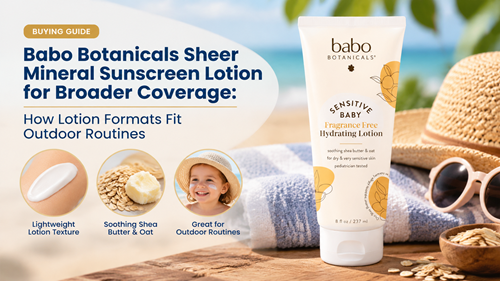
Babo Botanicals Sheer Mineral Sunscreen Lotion for Broader Coverage is mainly a coverage and routine decision. Caregivers choosing a lotion sunscreen for covering larger exposed skin areas during outings. A lotion can be easier than a stick for arms, legs, shoulders, and other broad areas, but the label still determines age directions, application amount, reapplication timing, active ingredients, and water-resistance claims.
The goal is not to find one universal “best” choice. It is to match the product to the child’s age, skin history, climate, bath frequency, caregiver preferences, and the current package directions.
Babo Botanicals Sheer Mineral Sunscreen Lotion For Broader Coverage: Match The Lotion To The Outdoor Routine
With Babo Botanicals Sheer Mineral Sunscreen Lotion for Broader Coverage, first confirm that the exact product is intended for the age and body areas you plan to protect. Broad-spectrum SPF tells you about UVA and UVB protection, while water resistance tells you how long labeled protection is maintained during swimming or sweating. Neither claim makes sunscreen a substitute for shade.
Lotion is useful for broad coverage because it can be spread in a continuous layer. The trade-off is that caregivers need enough time to apply it evenly before the family heads outside. Missed areas around straps, sleeves, ears, hands, and feet are a routine problem, not a formula problem.
Keep sunscreen where it will actually be used, but avoid prolonged heat and direct sun in cars or bags when the label advises otherwise. Check expiration and package condition, and do not use a product that has separated, changed smell, or been stored outside its recommended conditions.
Plan Coverage Before You Leave Home
When testing Babo Botanicals Sheer Mineral Sunscreen Lotion for Broader Coverage, start before a low-stakes outing so you can see how it spreads, dries, and interacts with clothing. If a child has a history of reactions or eczema, ask a clinician which sunscreen ingredients and formats are appropriate.
Sunscreen is only one layer of sun protection. A wide-brimmed hat, lightweight covering clothing, stroller shade, and avoiding peak direct sun when practical reduce the amount of exposed skin that needs product.
Read SPF, Broad Spectrum, And Water-Resistance Directions
| Label Item | What To Check | Routine Meaning |
|---|---|---|
| Broad spectrum | UVA + UVB statement | Useful as part of overall sun protection. |
| SPF | Current labeled value | Follow label directions; higher numbers do not eliminate reapplication. |
| Water resistance | 40 or 80 minutes when stated | Reapply after the labeled interval, swimming, sweating, or toweling. |
| Age | Infant/child directions | For under 6 months, seek shade and professional advice before sunscreen use. |
| Format | Lotion | Practical for larger exposed areas when applied evenly. |
For a direct product comparison, review the sheer mineral baby sunscreen lotion page and compare the current label, size, directions, and warnings before purchase.
If you are deciding between formats, review the lotion sunscreen for broader body areas guide to see how the format fits a real home routine before you buy.
For dry-skin context, open the mineral sun lotion application routine resource to compare how bathing frequency, water temperature, and after-care can change the result.
For a broader routine check, use the baby sunscreen lotion versus stick article so the product decision stays inside a simple routine instead of adding several new steps at once.
For another relevant comparison, read the full-area sun protection planning page before you commit to a new product, scent, or packaging format.
For manufacturer or dermatologist context, review the outdoor baby care lotion SPF guide source and then confirm the package in your hand, because formulas and directions can change.
A Practical Parent Checklist
- Read the exact current label, age guidance, ingredient list, warnings, and directions before first use.
- Introduce only one new bath or skincare product at a time so changes are easier to interpret.
- Use the smallest practical amount instead of assuming more product will work better.
- Keep water lukewarm, limit friction, and rinse cleanser thoroughly when the product is rinse-off.
- Check skin again later the same day and over repeated use for new dryness, redness, itching, or discomfort.
- Stop the product and seek professional advice when symptoms are severe, persistent, infected-looking, or accompanied by illness.
Keep the package until you know the product works for the routine. If more than one caregiver helps with baths or moisturizing, agree on the same amount, frequency, and stop signs so the child is not exposed to inconsistent use.
How To Decide Whether Babo Botanicals Sheer Mineral Sunscreen Lotion For Broader Coverage Fits
Use Babo Botanicals Sheer Mineral Sunscreen Lotion for Broader Coverage only when it solves a clear routine need and the child tolerates it. The most useful buying decision is one that stays easy to apply, easy to monitor, and easy to stop if the skin does not respond well.
Recheck the label when repurchasing, especially if packaging changes. Ingredient lists, sizes, scent variants, age wording, and directions can change over time.
Frequently Asked Questions
How often should I use Babo Botanicals Sheer Mineral Sunscreen Lotion for Broader Coverage?
Follow the current label and the child’s actual need. Many baby-care products do not need to be applied more often simply because they are gentle.
Should I introduce another new product at the same time?
It is usually easier to evaluate tolerance when only one skincare product changes at a time.
What should I do if the skin becomes red or itchy?
Stop the new product, rinse gently when appropriate, and monitor the child. Seek medical advice for persistent, worsening, swollen, blistered, oozing, or widespread symptoms.
Does a gentle or natural label guarantee no reaction?
No. Marketing terms do not guarantee individual tolerance. Read the complete ingredient list and follow the directions on the package.
When should I ask a pediatrician or dermatologist?
Ask for help when symptoms persist, interfere with sleep, appear infected, recur frequently, or do not respond to the child’s usual skincare plan.
