
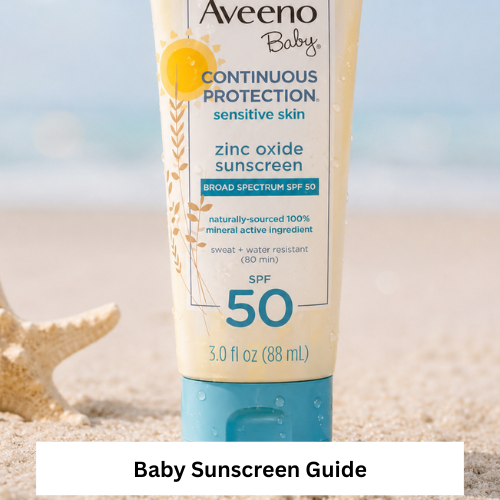
Choosing baby sunscreen requires more than looking for the highest SPF number. Parents need to consider the baby’s age, shade and clothing options, active ingredients, sensitive-skin needs, application method, water-resistance directions, and how easily the product can be kept away from the eyes and mouth.
Sun protection should begin with shade, protective clothing, a suitable hat, and careful outdoor timing. Sunscreen is an additional protective layer, not a replacement for physical coverage or supervision.
The baby skin care routine should also account for heat, hydration, skin reactions, and the product’s storage and expiration directions.
How to Choose Baby Sunscreen by Age and Skin Type
For babies younger than 6 months, the FDA recommends keeping them out of direct sunlight and asking a doctor before applying sunscreen. Shade and lightweight protective clothing should be the first options.
For babies older than 6 months, follow the product’s Drug Facts label and continue using shade, hats, and protective clothing.
Babies Younger Than 6 Months
Prioritize:
- Deep shade
- Lightweight clothing covering exposed skin
- A wide-brimmed hat
- A stroller canopy used according to its instructions
- Short outdoor periods
- Avoidance of peak sun when practical
- Pediatric advice before sunscreen use
Do not cover a stroller completely with a heavy blanket because airflow and heat can become concerns.
If adequate shade and clothing are not available, the American Academy of Dermatology says a minimal amount of broad-spectrum, water-resistant SPF 30 or higher may be used on limited exposed areas. Ask the baby’s doctor for individualized advice.
Babies 6 Months and Older
Choose a product with:
- Broad-spectrum protection
- SPF 30 or higher when following dermatology guidance
- Water resistance when swimming or sweating is expected
- Clear age and application directions
- A format that can be applied evenly
- Ingredients appropriate for the baby’s skin
The AAD recommends broad-spectrum, water-resistant SPF 30 or higher and notes that formulas containing zinc oxide or titanium dioxide may be less irritating for sensitive baby skin.
| Buying factor | What to look for | Why it matters | What to verify before buying |
| Baby’s age | Clear age guidance | Recommendations differ under 6 months | Drug Facts and doctor guidance |
| Protection | Broad-spectrum wording | Covers UVA and UVB protection | Exact label language |
| SPF | SPF 30 or higher under AAD guidance | Supports exposed-skin protection | Current SPF number |
| Active ingredients | Zinc oxide, titanium dioxide, or other listed filters | May affect sensitive-skin tolerance | Active ingredient panel |
| Water resistance | 40- or 80-minute label when offered | Guides swimming and sweating use | Reapplication directions |
Understanding Mineral Formulas
Mineral sunscreen commonly lists zinc oxide, titanium dioxide, or both as active ingredients. Dermatologists often recommend mineral formulas for sensitive skin because they may be less irritating.
A listed mineral baby sunscreen can help parents compare package format, active ingredients, and application directions, but verify the current Drug Facts panel before buying.
A mineral formula is not automatically suitable for every baby. Inactive ingredients, fragrance, preservatives, texture, and individual allergies still matter.
Zinc Oxide and Titanium Dioxide
Both are used in mineral sunscreen products. Protection should be judged by the finished product’s broad-spectrum and SPF labeling rather than the ingredient name alone.
A zinc oxide sunscreen baby option may be worth comparing when sensitive-skin tolerance is a priority.
Mineral products can leave a visible cast. Apply them in small sections and spread the formula evenly so missed areas are easier to identify.
Sensitive Skin and Eczema Considerations
Parents comparing sensitive skin sunscreen should check the active and inactive ingredient lists.
Ask a pediatrician or dermatologist before use when the baby has:
- Active eczema flares
- Broken skin
- Weeping or infected areas
- Known contact allergies
- Previous sunscreen reactions
- A prescribed topical treatment
- Severe skin sensitivity
Test the product on a small area before a major outing when the label and healthcare guidance permit it.
Stop use and seek advice when redness, swelling, blistering, hives, or significant discomfort develops.
Do not apply sunscreen to broken skin unless a healthcare professional has advised it.
How to Apply Sunscreen Safely
Apply the product according to the label before sun exposure. Many pediatric recommendations advise applying it about 15 to 30 minutes before going outdoors and reapplying every two hours, as well as after swimming, sweating, or towel drying.
Choose a Secure Application Area
Seat or hold the baby safely indoors or in deep shade. Keep the container away from the baby’s mouth.
Apply in Small Sections
Cover one area at a time and spread the product evenly.
Commonly missed areas include:
- Tops of the ears
- Cheeks
- Nose
- Back of the neck
- Shoulders
- Hands
- Tops of the feet
- Backs of the legs
Keep It Away From Eyes and Mouth
Do not apply too close to the eyelids or lips. Babies often rub their faces and place their hands in their mouths, so use clothing and shade to reduce exposed areas whenever practical.
Wash Hands After Application
Clean the caregiver’s hands and wipe product from the container exterior.
Reapplication and Water Resistance
No sunscreen should be treated as waterproof.
FDA labeling requires water-resistant products to state whether they remain effective for 40 or 80 minutes while swimming or sweating. Follow the specific label rather than relying on a general routine.
Reapply:
- According to the Drug Facts directions
- At least every two hours when directed
- After swimming
- After heavy sweating
- After towel drying
- When clothing or rubbing removes product
Do not assume that a high SPF eliminates the need for reapplication.
Product and Packaging Checks
Before buying, review:
- Drug Facts panel
- Active ingredient percentages
- SPF
- Broad-spectrum wording
- Water-resistance time
- Age directions
- Warnings
- Expiration date
- Storage temperature
- Package seal
- Seller information
Shoppers may use Thinkbaby Safe Sunscreen as a label-comparison example, but verify the current Drug Facts, size, seller, expiration information, and usage directions before buying.
Do not buy a container with a broken seal, missing label, or visible leakage.
Conclusion
The safest baby sunscreen routine begins with age-appropriate guidance, shade, protective clothing, and careful label reading. Keep babies younger than 6 months out of direct sunlight and consult their doctor before applying a product. For older babies, apply suitable broad-spectrum protection carefully, reapply as directed, and continue using physical sun protection.
FAQ
Can a baby under 6 months wear sunscreen?
Shade and protective clothing should be the first choices. Ask the baby’s doctor before applying sunscreen to an infant younger than 6 months.
What SPF should parents choose?
The AAD recommends broad-spectrum, water-resistant SPF 30 or higher. Follow the specific product label.
Is mineral sunscreen better for sensitive baby skin?
Zinc oxide and titanium dioxide formulas may be less irritating, but inactive ingredients and individual skin reactions still matter.
How often should it be reapplied?
Follow the label. Reapplication is commonly required every two hours and after swimming, sweating, or towel drying.
What should I do if my baby gets sunburned?
Move the baby out of the sun and contact the pediatrician promptly, particularly when the baby is younger than 1 year.
