
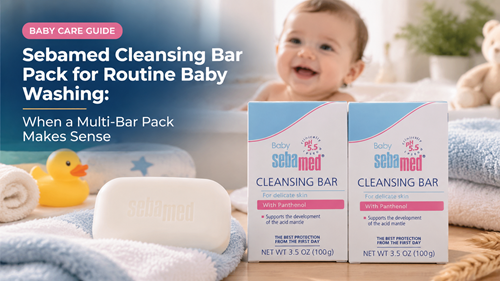
Sebamed Cleansing Bar Pack for Routine Baby Washing is easiest to judge when parents separate the product name from the job it needs to do. Parents considering a multi-bar purchase for frequent home bathing or shared family bathrooms. The useful questions are practical: how the format behaves with wet hands, how much cleanser is really needed, whether fragrance fits the family preference, how easily it rinses, and how the skin feels after the bath and after moisturizer.
The goal is not to find one universal “best” choice. It is to match the product to the child’s age, skin history, climate, bath frequency, caregiver preferences, and the current package directions.
Sebamed Cleansing Bar Pack For Routine Baby Washing: What To Check Before It Joins The Bath Shelf
A baby cleanser does not need dramatic foam to work. With Sebamed Cleansing Bar Pack for Routine Baby Washing, compare the current ingredient list, directions, age wording, fragrance information, and warnings on the package you actually receive. Marketplace titles can be longer than the label and should not replace the manufacturer directions.
For everyday bathing, technique is often as important as the bottle or bar. Keep the bath comfortably warm rather than hot, focus cleanser on areas that are dirty or sweaty, avoid rough washcloth scrubbing, and rinse until no slippery residue remains. Babies with dry or reactive skin may not need cleanser on every area at every bath.
Solid bars need an extra storage decision. A draining soap dish helps the bar dry between uses, while a bar left in standing water becomes soft and messy. Liquid washes avoid that issue but can be easier to over-dispense, especially with a pump. Either format can fit a sensible routine when the family uses a controlled amount.
Build A Short, Repeatable Bath Routine
Introduce Sebamed Cleansing Bar Pack for Routine Baby Washing on a calm day when you are not also testing a new lotion, detergent, sunscreen, or diaper product. That makes it easier to notice whether new redness, stinging, unusual dryness, or itching appears after the bath.
After rinsing, pat skin gently rather than rubbing. If the baby regularly feels dry after bathing, a suitable moisturizer can be applied while skin is still slightly damp. For persistent eczema, broken skin, oozing, swelling, or significant discomfort, routine product experiments should give way to professional medical guidance.
Compare Format, Fragrance, And Skin Feel
| Decision Point | What To Compare | Why It Matters |
|---|---|---|
| Format | Bar or liquid | Choose the format caregivers can use consistently without over-applying. |
| Fragrance | Unscented or scented | Match family preference and skin tolerance; stop if irritation develops. |
| Rinse | Clean rinse without heavy residue | Residue can make it harder to judge whether skin feels comfortable. |
| Storage | Dry, clean, easy to reach | Bars need drainage; bottles need clean pumps and secure caps. |
| Routine | Short bath plus after-care | A simple routine is easier to evaluate than several simultaneous changes. |
For a direct product comparison, review the cleansing bar multipack for baby care page and compare the current label, size, directions, and warnings before purchase.
If you are deciding between formats, review the multi-bar soap purchase planning guide to see how the format fits a real home routine before you buy.
For dry-skin context, open the solid cleanser stock-up for families resource to compare how bathing frequency, water temperature, and after-care can change the result.
For a broader routine check, use the baby bath bar pack comparison article so the product decision stays inside a simple routine instead of adding several new steps at once.
For another relevant comparison, read the how to rotate cleansing bars hygienically page before you commit to a new product, scent, or packaging format.
For manufacturer or dermatologist context, review the bulk baby cleansing bar option source and then confirm the package in your hand, because formulas and directions can change.
A Practical Parent Checklist
- Read the exact current label, age guidance, ingredient list, warnings, and directions before first use.
- Introduce only one new bath or skincare product at a time so changes are easier to interpret.
- Use the smallest practical amount instead of assuming more product will work better.
- Keep water lukewarm, limit friction, and rinse cleanser thoroughly when the product is rinse-off.
- Check skin again later the same day and over repeated use for new dryness, redness, itching, or discomfort.
- Stop the product and seek professional advice when symptoms are severe, persistent, infected-looking, or accompanied by illness.
Keep the package until you know the product works for the routine. If more than one caregiver helps with baths or moisturizing, agree on the same amount, frequency, and stop signs so the child is not exposed to inconsistent use.
How To Decide Whether Sebamed Cleansing Bar Pack For Routine Baby Washing Fits
Use Sebamed Cleansing Bar Pack for Routine Baby Washing only when it solves a clear routine need and the child tolerates it. The most useful buying decision is one that stays easy to apply, easy to monitor, and easy to stop if the skin does not respond well.
Recheck the label when repurchasing, especially if packaging changes. Ingredient lists, sizes, scent variants, age wording, and directions can change over time.
Frequently Asked Questions
How often should I use Sebamed Cleansing Bar Pack for Routine Baby Washing?
Follow the current label and the child’s actual need. Many baby-care products do not need to be applied more often simply because they are gentle.
Should I introduce another new product at the same time?
It is usually easier to evaluate tolerance when only one skincare product changes at a time.
What should I do if the skin becomes red or itchy?
Stop the new product, rinse gently when appropriate, and monitor the child. Seek medical advice for persistent, worsening, swollen, blistered, oozing, or widespread symptoms.
Does a gentle or natural label guarantee no reaction?
No. Marketing terms do not guarantee individual tolerance. Read the complete ingredient list and follow the directions on the package.
When should I ask a pediatrician or dermatologist?
Ask for help when symptoms persist, interfere with sleep, appear infected, recur frequently, or do not respond to the child’s usual skincare plan.
