
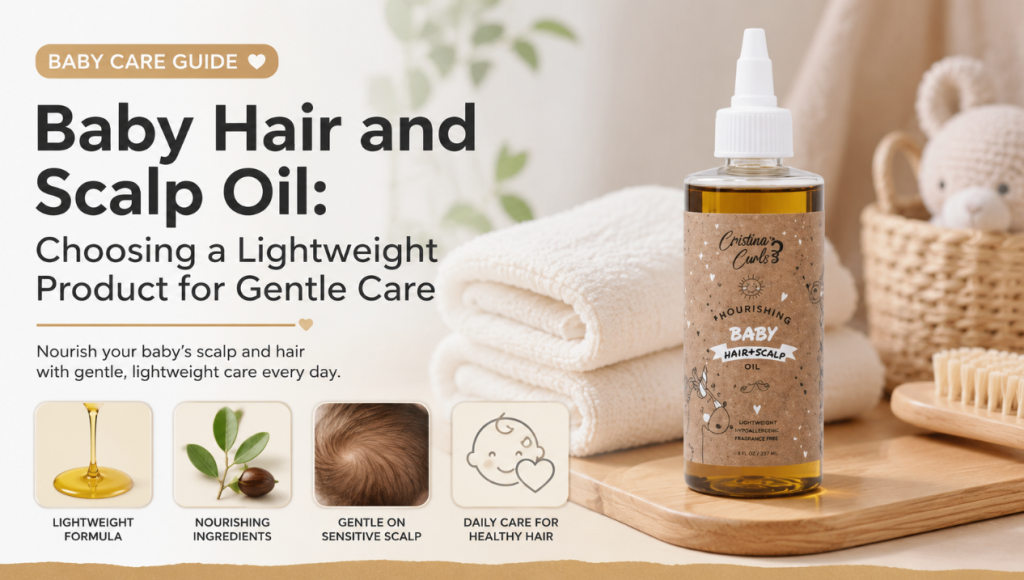
Baby hair and scalp oil should be chosen more cautiously than an adult hair oil because the scalp is delicate, the product can run toward the eyes, and heavy residue can trap lint or become difficult to wash out. Oil is not necessary for every baby and should not be used to cover an unexplained rash.
For occasional dryness or gentle pre-wash softening, a lightweight formula with controlled dispensing is easier to manage than a thick, strongly scented blend. The label should clearly state age, scalp use, application time, and removal directions.
When A Baby Hair And Scalp Oil May Be Useful
A small amount of oil can reduce friction during gentle scalp massage or soften dry-looking scale before washing. It should not be scraped, picked, or left in a thick layer for long periods unless the product or clinician specifically advises that use.
Cradle cap, eczema, irritation from products, and infection can look similar to a parent. If the scalp is very red, wet, painful, odorous, spreading, or associated with fever or poor feeding, a cosmetic oil is not the correct first step.
Scalp Oil Features That Keep The Routine Manageable
The most practical formula is easy to control, easy to remove, and unlikely to drip into the eyes or coat bedding.
Light Fluid Texture
A thin oil spreads with a few drops and can be distributed using fingertips without vigorous rubbing. Very heavy oils may sit on the scalp and require repeated shampooing.
Apply to the fingertips first rather than pouring directly onto the head. This reduces dripping and overapplication.
Fragrance And Essential Oils
Strong fragrance and essential oils are unnecessary for scalp care and may irritate sensitive skin or eyes. Natural aroma is still scent exposure.
Prefer fragrance-free or minimally scented products and stop if the baby rubs the head or eyes after application.
Washability
The package should explain whether the oil is a leave-on product or a short pre-wash treatment. Using the wrong method can create buildup.
Test the recommended amount on a small area and confirm that the usual gentle shampoo removes it without repeated scrubbing.
Applicator Design
A narrow nozzle, drop reducer, or small pump helps place only a few drops. Wide-mouth bottles can spill and droppers can touch the scalp.
Keep the dispenser clean, never share it, and close the bottle before lifting the baby.
Scalp Condition
Dryness without inflammation is different from thick scale, redness, broken skin, or hair loss. The label cannot diagnose the cause.
Photograph a persistent area for the pediatrician and avoid changing multiple scalp products before the visit.
Separate Scalp Care From General Hair Styling
A baby scalp moisturizer should have clear directions for scalp use and a texture that can be removed without harsh washing.
The HealthyChildren guidance on cradle cap oil supports gentle scale care and professional review when the condition is severe or spreading.
A gentle hair oil should be compared by ingredients, scent, applicator, and washability rather than promises of faster hair growth.
A simple newborn scalp care routine avoids unnecessary styling products and helps caregivers notice changes in scale, redness, or comfort.
A non-greasy baby oil is useful only when a very small amount gives enough slip without coating the scalp or pillowcase.
A plant-based scalp oil still needs a full ingredient review because botanical extracts and essential oils can add fragrance and sensitivity concerns.
Scalp Product Decision Guide
Use the scalp’s appearance and the product directions to decide whether oil belongs in the routine at all.
| Scalp Situation | Reasonable Next Step | Avoid |
|---|---|---|
| Normal comfortable scalp | No oil may be needed | Adding products for shine alone |
| Mild dry-looking flakes | Small label-directed pre-wash trial | Scraping or forceful brushing |
| Thick cradle-cap scale | Gentle care and pediatric guidance | Heavy scented oil left indefinitely |
| Red or oozing areas | Medical assessment | Covering with cosmetic oil |
| Eye rubbing after use | Stop product and rinse as directed | Repeating application |
Apply Scalp Oil Without Overcoating
A few controlled drops are easier to remove and less likely to run toward the face.
- Read the age, scalp-use, timing, and washing directions.
- Inspect the scalp for redness, broken skin, swelling, or oozing.
- Dispense one or two drops onto clean fingertips.
- Touch only the intended scalp area and massage very lightly.
- Keep the baby upright and watch for product moving toward the face.
- Wash or leave on exactly as directed, then clean the applicator exterior.
Do not use fingernails to loosen scale. If a soft brush is recommended, use very light pressure and stop when the scalp becomes red.
Use The Smallest Amount For The Shortest Useful Time
A baby hair and scalp oil should be light, controllable, minimally scented, and easy to remove. It can support gentle pre-wash care, but it is not essential for normal hair growth and should not cover an inflamed scalp.
Follow the label, keep oil away from the eyes, and seek professional advice when scale, redness, or discomfort persists. More oil is rarely the answer to a scalp problem.
Frequently Asked Questions
Can baby scalp oil help cradle cap?
Some guidance uses a small amount to soften scale before washing, but follow pediatric advice and avoid leaving heavy oil indefinitely.
How often should baby hair oil be used?
Only as often as the label or clinician recommends. A normal comfortable scalp may not need oil.
Can oil make a baby’s hair grow faster?
There is no cosmetic oil that reliably changes normal infant hair growth. Choose products for gentle care, not growth claims.
Why is the scalp red after oiling?
The formula, fragrance, friction, buildup, or an underlying condition may be responsible. Stop use and seek advice if redness persists.
How do I keep oil out of the baby’s eyes?
Dispense onto fingertips, use very little, keep the baby upright, and never pour directly onto the head.
