A safe baby skincare routine should be simple, gentle, and focused on protecting delicate newborn skin. New parents do not need many products at the start; they need the right basics, careful bathing habits, and products that are suitable for sensitive baby skin.
This guide explains what to check before choosing baby bath products, baby moisturizer, diaper cream, and everyday skin care items. Parents can also browse baby skin care when comparing gentle products, baby care categories, and helpful skincare guides.
Why a Baby Skincare Routine Should Stay Simple
Newborn skin is delicate and can become dry, irritated, or rash-prone when too many products are used. A simple routine helps parents avoid unnecessary fragrance, harsh cleansing, and repeated product changes.
A basic routine usually includes gentle cleansing, careful drying, light moisturizing when needed, diaper-area protection, and checking the skin for dryness or rash. If your baby has ongoing redness, open skin, swelling, fever, or discomfort, speak with a pediatrician.
Baby Bath Routine for Newborn Skin
Bath time does not need to be long. Use lukewarm water, keep the room comfortable, and avoid scrubbing. Pat the skin dry with a soft towel, especially around skin folds, the neck, underarms, and diaper area.
Use a mild cleanser from baby soaps and cleansers only when needed, and verify before buying that the product is suitable for your baby’s age and skin type.
What Parents Should Check Before Bath Products
Look for simple formulas, gentle cleansing claims, and clear usage directions. Avoid assuming that every “baby” product is suitable for newborn skin.
If the product page does not clearly mention fragrance status, usage guidance, or age suitability, verify before buying.
Choosing Moisturizer for Gentle Baby Care
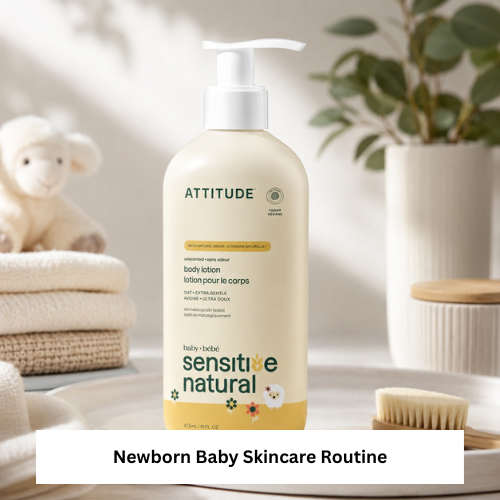
A light baby moisturizer can help when newborn skin feels dry, flaky, or rough after bathing. Choose a product that fits your baby’s skin needs and check whether it is fragrance free, suitable for sensitive skin, and easy to apply.
For very dry skin, eczema-prone skin, or repeated irritation, parents should ask a pediatrician before using treatment-style creams.
Diaper Area Care and Rash Prevention
The diaper area needs extra attention because moisture, friction, and stool contact can irritate the skin. Change diapers regularly, clean gently, and let the area dry before applying a barrier product.
Keep a simple diaper cream ready for redness, but verify ingredients, usage directions, and age suitability before buying.
| Product Type | Best Use | What to Check | What to Avoid |
| Gentle cleanser | Bath time and light washing | Mild formula, newborn suitability, clear directions | Strong fragrance or harsh scrubbing |
| Moisturizer | Dry or flaky skin | Fragrance-free option, sensitive skin suitability | Using too many products at once |
| Diaper cream | Diaper-area protection | Barrier support, usage directions, age suitability | Applying on broken skin without medical advice |
| Baby oil | Massage or dry patches if suitable | Ingredient list and slip risk | Using near face, hands, or unsafe surfaces |
| Sunscreen | Only when age-appropriate | Mineral sunscreen and pediatric guidance | Using on very young babies without checking guidance |
Setup Tips for a Safe Daily Routine
Keep baby skincare items in one clean basket near the changing area or bathroom. This makes bath time, diaper changes, and moisturizing easier.
Before using any new product, patch test on a small area when appropriate and watch for redness, bumps, or discomfort. Do not introduce many new products on the same day because it becomes harder to know what caused irritation.
You can compare ingredient styles with baby healing ointment options before deciding what type of product fits your baby’s needs.
Common Beginner Mistakes to Avoid
Do not over-bathe your newborn if the skin is becoming dry. Do not rub the skin hard after bathing. Do not apply adult skincare products on baby skin.
Avoid using multiple scented products together. If dryness or rash gets worse after a product change, stop using the product and ask a healthcare professional for guidance.
Troubleshooting Newborn Skin Problems
If your baby’s skin looks dry, reduce harsh washing and check whether a gentle moisturizer is needed. If the diaper area is red, change diapers more often and keep the area clean and dry.
If a rash spreads quickly, looks infected, causes fever, blisters, swelling, or unusual discomfort, parents should seek medical advice instead of trying multiple products at home.
Practical Buying Checklist
- Check age suitability before buying.
- Verify fragrance-free or sensitive-skin claims when needed.
- Review cleanser, lotion, oil, and diaper cream ingredients.
- Choose products that match newborn skincare needs.
- Check product size and storage space.
- Verify usage directions before applying.
- Review safety warnings on the product page.
- Check return policy before buying.
- Confirm delivery and support details.
- Verify before buying if any detail is unclear.
Conclusion
A safe baby skincare routine should be calm, simple, and based on your baby’s real skin needs. Start with gentle cleansing, careful drying, moisturizer only when needed, and diaper-area protection, then verify every product detail before buying.
FAQ
How often should I follow a baby skincare routine?
A simple daily check is enough for most babies. Bathing frequency depends on your baby’s needs and pediatric guidance.
Do newborns need moisturizer every day?
Not always. Use moisturizer when skin looks dry or rough, and choose a gentle product suitable for sensitive baby skin.
What should I avoid on newborn skin?
Avoid harsh fragrance, adult skincare products, scrubbing, and using many new products at once.
When should I call a doctor for baby skin issues?
Call a doctor if the rash spreads, looks infected, blisters, causes fever, or your baby seems very uncomfortable.
Can I use diaper cream every day?
Some parents use barrier cream as needed. Always follow product directions and verify suitability before buying.
