Baby eczema care starts with understanding dry patches, rough skin, redness, itching signs, and possible triggers before choosing any skincare product. Parents should look for gentle, fragrance-free options and check with a pediatrician if the skin looks painful, infected, spreading, or not improving.
Eczema in babies can look different from regular dryness, so parents should avoid guessing. A simple routine with mild cleansing, careful moisturizing, and trigger tracking can help families manage daily skin comfort while avoiding harsh products.
Why Baby Eczema Care Needs a Gentle Routine
Baby eczema care should focus on protecting the skin barrier, reducing irritation, and keeping routines simple. Babies have delicate skin, so too many products or strong fragrances may make dryness or irritation worse.
Parents should not treat baby eczema as a cosmetic issue only. If the baby seems uncomfortable, scratches often, have broken skin, or develop oozing or swelling, speak with a healthcare professional.
Common Signs of Eczema in Babies
Eczema in babies may appear as rough patches, dry areas, redness, bumps, or itchy-looking skin. It may show on cheeks, arms, legs, scalp, or body folds, but location can vary.
Parents can compare eczema in babies guidance before choosing daily care products for dry or sensitive skin.
Watch for:
- Dry or rough patches
- Red or irritated-looking areas
- Itchy behavior or rubbing
- Flaky skin
- Skin that gets worse after certain products
- Discomfort after baths
- Repeated irritation in the same area
| Product Type | Best For | Buyer Benefit | Limitation | Verify Before Buying |
| Fragrance-free moisturizer | Daily dryness support | Helps support skin comfort | Texture varies | Ingredient list and age guidance |
| Eczema cream | Dry patches and rough areas | More targeted skincare support | Not all are for every baby | Pediatrician advice and label directions |
| Gentle cleanser | Bath routine | Reduces harsh washing | Overuse may dry skin | Fragrance-free and mild formula |
| Ointment or balm | Barrier support | Helps seal moisture | Can feel heavy | Use area and ingredient details |
| Bath oil | Very dry skin routines | Adds moisture during bath care | Slippery bath safety risk | Directions and safe use guidance |
Triggers Parents Should Track
Common triggers can include fragrance, harsh soap, hot baths, rough fabrics, sweat, weather changes, or certain skincare ingredients. Every baby is different, so tracking what changes before flare-ups can help.
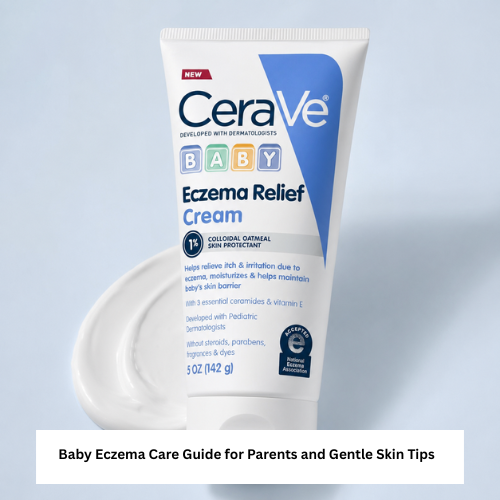
A baby eczema cream may help support dry skin comfort, but parents should verify the label, ingredients, and pediatrician guidance before buying.
Keep a simple note of:
- New lotions or washes
- Laundry detergent changes
- Bath temperature
- Clothing fabric
- Weather changes
- Food changes if advised by a pediatrician
- Scratching or sleep discomfort
Skincare Routine Tips for Sensitive Skin
Keep baths short and use lukewarm water. Avoid strong fragrance and avoid scrubbing the skin. After bathing, gently pat the skin dry and apply moisturizer while the skin is still slightly damp if the product directions allow it.
For daily routines, fragrance-free baby skincare can be a better starting point for babies with dryness or sensitivity.
Avoid layering too many products. If the baby’s skin reacts, it becomes harder to know which product caused the issue.
Dry Patches and Moisturizer Guidance
Baby dry patches need gentle care and regular observation. A plain, mild moisturizer may be useful, but parents should check age guidance and ingredient details.
For rough areas, baby dry patches guidance can help parents compare dry skin routines before choosing creams or oils.
Do not use adult eczema products on babies unless a healthcare professional says it is safe. Baby-specific labels still need checking because ingredients and use directions can vary.
For product comparison, review baby eczema moisturizer options and verify ingredients, age guidance, texture, and return policy before buying.
Safety Notes Before Buying
Baby eczema products should be chosen carefully. Avoid products with strong fragrance, unclear ingredient lists, or claims that sound too strong. Do not rely on a product to diagnose or treat a medical condition.
A sensitive skin baby products guide can help parents compare gentle skincare categories before buying.
Call a pediatrician if eczema looks infected, is bleeding, keeps spreading, affects sleep, or does not improve with gentle care.
Common Buying Mistakes
Parents often buy too many products at once. This can irritate the skin and make it harder to understand what works.
Avoid these mistakes:
- Using strongly scented baby products
- Switching products too often
- Using hot bath water
- Applying adult skincare without advice
- Ignoring broken or oozing skin
- Not checking age guidance
- Skipping return policy and ingredient review
Troubleshooting Baby Eczema Care
If dryness gets worse after a new product, stop using it and review the ingredient list. If bath time seems to trigger dryness, reduce bath length, use lukewarm water, and check cleanser type.
If moisturizer feels sticky or uncomfortable, try a lighter texture only after checking ingredients. If the baby scratches often, ask a pediatrician about next steps.
Practical Buying Checklist
Before buying, confirm:
- Size or fit: Product amount matches how often you plan to use it
- Compatibility: Suitable for baby, infant, or newborn skin if needed
- Safety: Fragrance, age guidance, and warning labels are checked
- Material or build quality: Packaging, pump, lid, or tube is easy to use
- Setup or installation: Routine is simple for bath time or diaper bag use
- Maintenance: Product is easy to store and close properly
- Warranty: Verify before buying if listed
- Return policy: Check before ordering
- Replacement parts: Verify pump, cap, refill, or bundle details if available
- Delivery or support: Confirm shipping and seller support
- Verify before buying: Do not assume ingredient safety, medical claims, or suitability for eczema-prone skin
Conclusion
Baby eczema care works best with gentle routines, trigger tracking, fragrance-free choices, and careful product checks. Parents should compare moisturizers, cleansers, creams, ingredients, and pediatric guidance before choosing baby eczema care products.
FAQ
What does baby eczema look like?
It may look like dry, rough, red, flaky, or itchy-looking skin patches.
Should I use fragrance-free products for baby eczema?
Fragrance-free products are often a better choice for sensitive skin, but always check the full label.
Can baby eczema cream cure eczema?
Do not assume a cream cures eczema. Use products as directed and ask a pediatrician for medical guidance.
When should I call a doctor?
Call a doctor if skin is oozing, bleeding, painful, spreading, infected-looking, or not improving.
What should I verify before buying?
Verify age guidance, ingredients, fragrance status, use directions, return policy, and pediatric advice when needed.
