The safest way to think about baby powder starts before application: decide whether a loose powder is needed at all. The American Academy of Pediatrics’ HealthyChildren guidance advises avoiding baby powder for infants and children because inhalation can injure or irritate the lungs. If a caregiver is nevertheless using a powder under current label or professional guidance, preventing airborne exposure is a central handling priority.
Do not shake or puff loose powder near a baby’s face. Keep the container out of the child’s reach, read the current package directions, and stop treating powder as a routine step when the label, skin condition, or professional advice points elsewhere.
Where Powder Fits — And Where It May Not
Powder products can be marketed for moisture absorption, chafing, body use, diaper-area care, or other purposes. Those uses are not interchangeable. A product with a cosmetic ingredient panel may have different instructions from a powder carrying an active ingredient such as zinc oxide.
Before use, identify the exact product type in the baby powders or on the package in hand. Check the intended body area, age wording, warnings, active ingredients, and whether the label actually describes the situation you are trying to address.
For routine diaper care, frequent diaper changes, gentle cleansing, and keeping the area appropriately dry are more fundamental than adding loose powder. If a barrier is needed, a cream, ointment, or paste may be the relevant product format instead. A persistent or worsening rash deserves assessment rather than repeated experimentation with powders. For broader symptom context, the baby rash care explains common rash patterns and care boundaries. A practical comparison example is cornstarch powder; the current product page can be checked against the label in hand.
Reducing Airborne Powder Is The Main Handling Question
Loose particles can be inhaled when a container is shaken, dropped, squeezed, or played with. A visible cloud is an obvious warning sign, but fine particles do not have to be dramatic to reach the nose or mouth. The child’s face should therefore be kept away from the container and from any loose powder being handled.
HealthyChildren.org specifically warns against baby powder and notes risks from inhaling both talc-containing and cornstarch powders. That guidance is stronger than many old household routines that treated powder as an automatic part of every diaper change.
Application Technique Should Follow The Current Label
There is no universal application amount that fits every powder product. Some labels may instruct an adult to place a small amount into the hand away from the child before applying it; other products may have different directions or may not be intended for infant diaper use at all. Use the current package as the primary instruction source.
If a product is being used in a situation allowed by its label and professional guidance, keep the container low and away from the face. Avoid shaking powder directly onto the child. Keep powder away from the eyes, nose, and mouth, and avoid any body area excluded by the package directions. The same question can be tested against medicated powder, a related listing already available in the catalog.
Do not assume that more powder works better. Excess loose product can spread beyond the intended area, collect in folds, transfer onto clothing or bedding, and increase the chance that particles become airborne during movement or cleanup.
- Read the current label rather than relying on an older online description.
- Confirm that the product is intended for the age and body area in question.
- Check whether the package contains an active-ingredient or Drug Facts panel.
- Keep the child’s face away from the container and application area.
- Use only the amount and method described by the manufacturer.
- Wash or clean hands as directed after application.
Storage Prevents A Different Kind Of Exposure
Powder containers can be attractive to young children because they are lightweight and easy to shake. Storage matters even when the product is not being applied. Keep the container securely closed and out of reach, and do not leave it on a changing surface where a child can grab, squeeze, or knock it over.
Also check the package condition. A damaged cap, cracked container, loose seal, or powder-covered exterior can increase uncontrolled dispersal. Store the product according to the manufacturer’s temperature and moisture instructions and keep the label readable so warnings are available when needed.
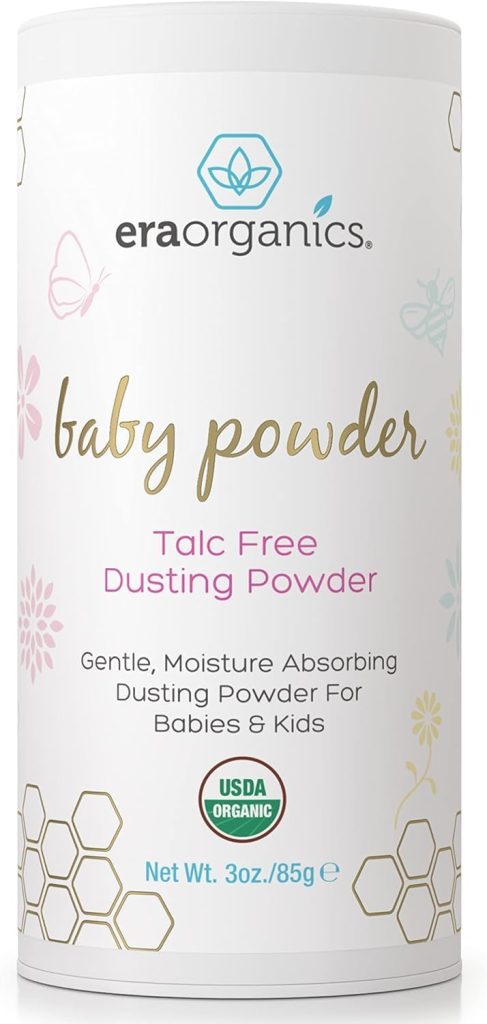
When traveling, avoid loosely packing a powder container where pressure can open or squeeze it. A separate sealed bag can contain an accidental spill, but it does not make an unsuitable product appropriate for child use. For another real-world comparison, see organic baby powder and verify the current package information.
When Not To Use A Powder
A loose powder should not be treated as a solution for every red, wet, itchy, or irritated area. Do not apply a product to broken skin, the face, mucous membranes, or any other excluded area unless its current label and professional guidance specifically permit that use.
Stop and reassess if the child develops coughing, breathing difficulty, eye exposure, marked redness, swelling, hives, blistering, or a worsening skin problem. A powder that seems convenient is not worth continuing when the reaction or exposure itself is concerning.
For diaper-area problems, severe pain, fever, spreading redness, open sores, bleeding, pus, blistering, or a rash that persists despite routine care can signal a need for pediatric evaluation. Product comparison should not delay care for symptoms that may need diagnosis.
When Professional Advice Is More Useful Than Another Product
Families often search for a new powder when the real question is why the skin keeps becoming irritated. A pediatrician or dermatologist can help distinguish friction and moisture irritation from eczema, infection, contact dermatitis, yeast-related rash, or another condition that may require different management.
Respiratory exposure is another situation where product-switching is not the right response. If a child inhales a meaningful amount of powder or develops coughing, breathing symptoms, or distress after exposure, contact appropriate medical or poison-control services rather than waiting to see whether a different formula would be better.
The examples below show that “baby powder” can refer to different bases and purposes. Their presence in the catalog does not mean the same directions apply to each.
For a marketplace package reference, check Johnson's baby powder against the current label directions discussed above; the marketplace page does not replace the package instructions.
 Catalog ExampleJohnson’s Baby Powder with Naturally Derived Cornstarch, Aloe & Vitamin E for Delicate Skin, Hypoallergenic, Free of Parabens,…
 Catalog ExampleCaldesene Medicated Protecting Powder with Zinc Oxide & Cornstarch-Talc Free, 5 Ounce (3 Pack)
 Catalog ExampleEra Organics Talc-Free Organic Baby Powder – USDA Organic Dusting Powder with Arrowroot, Calendula and Cornstarch for Newborns,…