A baby rash can happen for many reasons, including moisture, heat, friction, drool, diaper irritation, dryness, or sensitive skin. Parents should watch the rash location, color, texture, timing, and whether the baby seems uncomfortable.
Many mild rashes improve with gentle care, but some need medical advice. If a rash spreads quickly, comes with fever, blisters, swelling, pus, breathing trouble, or unusual sleepiness, parents should contact a healthcare professional.
How to Understand a Baby Rash Safely
A baby rash should be checked by where it appears and what may have triggered it. Diaper-area redness may be linked with moisture and friction. Neck-fold redness may come from drool or trapped moisture. Dry, itchy patches may need a different approach.
If you are unsure, avoid using multiple creams at once. Keep the skin clean, dry, and protected while you decide whether medical advice is needed.
Common Baby Rash Types Parents See
| Rash Type | Common Area | Possible Trigger | Basic Care Check | When to Get Help |
| Diaper rash | Diaper area | Moisture, friction, stool contact | Frequent changes and barrier cream | Open skin, bleeding, pus, fever |
| Heat rash | Neck, chest, folds | Overheating and sweat | Cool clothing and dry skin | Rash spreads or baby seems unwell |
| Drool rash | Chin, cheeks, neck | Saliva and wiping | Gentle drying and barrier care | Cracking or infection signs |
| Eczema-like rash | Cheeks, arms, legs | Dryness or sensitivity | Moisturizing and trigger checks | Severe itch, worsening, sleep trouble |
| Product reaction | Anywhere product touched | New lotion, wash, wipes | Stop the new product | Swelling, hives, breathing issues |
Diaper Rash Care Tips
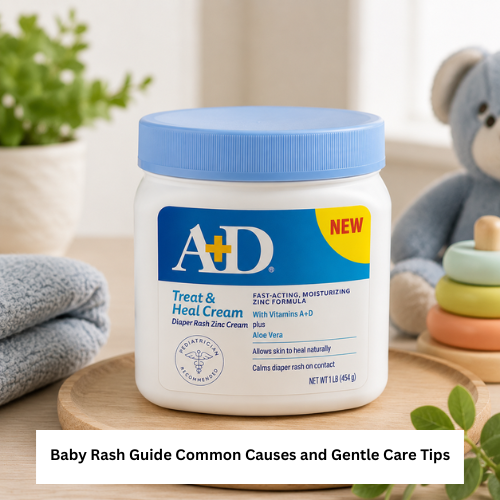
Diaper rash is one of the most common skin concerns for babies. Change diapers often, clean gently, and allow the area to dry before applying a barrier cream.
Parents can review diaper rash creams when comparing barrier products, but should verify active ingredients, usage directions, and age suitability before buying.
You can also compare diaper rash cream options if you want to understand different product styles before choosing one.
Heat Rash and Moisture-Related Rash
Heat rash can appear when a baby gets too warm or sweat becomes trapped. Dress the baby in breathable clothing, avoid overheating, and keep skin folds clean and dry.
Do not apply heavy creams to heat rash unless advised, because heavy products may trap more moisture. If the baby has fever or seems unwell, ask a healthcare professional.
Eczema-Like Rash and Dry Skin
An eczema-like rash may look dry, rough, red, or itchy. Moisturizing, avoiding fragrance, and checking triggers can help, but ongoing eczema symptoms should be discussed with a pediatrician.
For dry or eczema-prone skin concerns, parents can read baby eczema care guidance before choosing a cream or moisturizer.
Product Reaction and Sensitive Skin Rash
A sensitive skin rash may appear after a new wash, lotion, oil, wipe, detergent, or cream. Stop the new product and watch whether the skin improves.
Parents with babies who react easily can review sensitive baby skincare guidance before adding new products to the routine.
Common Mistakes Parents Should Avoid
Do not use adult rash creams on babies unless a doctor recommends them. Do not use many products at the same time because it becomes difficult to identify the cause.
Avoid scrubbing the rash. Avoid tight diapers or clothing that rubs the irritated area. Do not ignore rashes that look infected, painful, or fast-spreading.
Troubleshooting Baby Rash at Home
First, think about what changed. Did you start a new diaper, wipe, cleanser, lotion, detergent, food, or fabric? Did the baby get sweaty or stay in a wet diaper longer than usual?
Next, simplify the routine. Use gentle cleansing, careful drying, and only one suitable product at a time. If the rash does not improve or gets worse, seek medical advice.
Practical Buying Checklist
- Check whether the product matches the rash type.
- Verify age suitability before buying.
- Review ingredients and fragrance status.
- Check compatibility with sensitive baby skin.
- Verify diaper-area use if buying a rash cream.
- Check whether the product is a cleanser, barrier cream, moisturizer, or treatment.
- Review safety warnings and usage directions.
- Check return policy before buying.
- Confirm delivery and support details.
- Verify before buying if the rash-related claim is unclear.
Conclusion
A baby rash should be handled with gentle care, careful observation, and the right product checks. Keep the skin clean and dry, avoid harsh products, verify rash-care items before buying, and seek medical advice when symptoms are serious or do not improve.
FAQ
What is the most common baby rash?
Diaper rash is very common because the diaper area is exposed to moisture, friction, and stool contact.
Can baby rash go away on its own?
Some mild rashes improve with gentle care, but worsening, painful, infected-looking, or fever-related rashes need medical advice.
Should I use cream on every baby rash?
No. The right product depends on the rash type. Verify the product use before applying it.
What can cause sensitive baby skin rash?
New wipes, lotions, detergents, soaps, heat, drool, and diaper friction can trigger irritation.
When is baby rash serious?
Seek help if the rash spreads quickly, blisters, oozes, comes with fever, or your baby seems very unwell.
