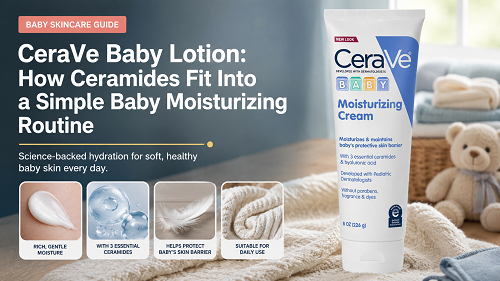
CeraVe Baby Lotion is the product at the center of this guide. CeraVe Baby Moisturizing Lotion is a lightweight, fragrance-free lotion developed with pediatric dermatologists. The current formula highlights three essential ceramides plus niacinamide, hyaluronic acid, and vitamin E for daily hydration. The goal is not to label one formula as perfect for every baby, but to help parents compare ingredients, texture, routine fit, and signs that a product should be stopped.
It fits caregivers who want an unscented daily lotion with a light finish and a barrier-focused ingredient profile. It is especially practical after bathing when a cream feels heavier than necessary for the whole body. Start with a small amount, keep the rest of the routine stable, and judge the baby’s skin over repeated use rather than one application.
CeraVe Baby Lotion: What The Formula Contributes
Ceramides are lipids found naturally in the outer skin barrier. In a moisturizer, they are part of a broader system that also needs water-binding and emollient ingredients to reduce dryness and support comfort.
The manufacturer’s page explains how a ceramide moisturizer for babies uses several barrier-supporting ingredients together rather than relying on ceramides alone.
Texture, Ingredients, And Sensitive-Skin Trade-Offs
The product’s lightweight texture makes it easier to spread over arms, legs, and trunk. For isolated rough patches, a thicker cream or petrolatum-based ointment may last longer depending on the child’s needs.
The internal product page is a convenient place to compare this baby skin barrier lotion with the exact size and listing available on the site.
A simple routine is easier to assess: gentle cleanser only when needed, short lukewarm bath, pat dry, then moisturizer. Add new products one at a time rather than building a long multi-step regimen.
For daily hydration after bath, the most useful comparison is often whether a lotion, cream, or ointment gives enough staying power without making the routine uncomfortable.
Fit The Product Into A Minimal Moisture Routine
Use moisturizer on clean skin and focus first on the areas that actually feel dry. After a bath, gently pat the skin and apply the product before the skin has become completely dry. Avoid layering several new lotions, oils, and ointments together because that makes tolerance difficult to interpret.
A fragrance-free ceramide care fits well with a simplified routine because it removes added scent while still allowing parents to judge the moisturizer’s texture and tolerance.
Match texture to the job. Lotion is efficient over large areas, cream provides more richness, and ointment forms a stronger occlusive layer over focused dry or chafed areas. The best routine is the simplest one that keeps the skin comfortable.
An infant moisturizer for rough patches should be evaluated by how long the skin stays comfortable; stubborn areas may need a richer texture or professional advice.
What Parents Should Compare Before Buying
Read the current package instead of relying on an old marketplace description. Formulas, fragrance choices, active ingredients, age directions, and warnings can change. Compare the complete label with the job you want the product to do.
| Decision Point | Current Position | Why It Matters |
|---|---|---|
| Key barrier lipids | Three essential ceramides | Part of the overall moisturizer system |
| Texture | Lightweight lotion | Easy daily body application |
| Fragrance | No added fragrance | Useful for simplified routines |
| Supporting ingredients | Niacinamide, hyaluronic acid, vitamin E | Check current package for updates |
Dermatology guidance supports a simple lotion routine for caregivers built around short lukewarm bathing, mild fragrance-free cleansing, and prompt moisturizing when skin is dry or eczema-prone.
For CeraVe Baby Lotion, the most useful question is whether the formula solves a real routine problem without adding unnecessary steps. A product that is easy to apply, easy to stop, and easy to evaluate is often more practical than a complicated routine built around marketing claims.
A Practical First-Use Checklist
- Confirm the exact product, variant, age guidance, ingredient list, and warnings on the package.
- Introduce CeraVe Baby Lotion without adding another new skincare product on the same day.
- Use a small amount on a limited area first when the child has sensitive or reactive skin.
- Follow the label for rinse-off versus leave-on use and keep products away from the eyes and mouth unless specifically intended there.
- Check the skin again later the same day and over the next several uses for redness, dryness, swelling, or discomfort.
- Stop and seek professional guidance when symptoms are severe, persistent, infected-looking, or associated with a baby who seems unwell.
Write down the date the product was started and keep the bottle or package until you know it is tolerated. This simple habit makes it easier to identify the likely trigger if several caregivers share the routine.
How To Decide If CeraVe Baby Lotion Fits Your Routine
Choose CeraVe Baby Lotion when you want fragrance-free daily moisture with a ceramide-focused formula and a non-heavy finish. Reassess the texture if the skin remains rough soon after application or if a clinician recommends a richer barrier layer.
Use the product according to its current label, observe the skin rather than the marketing, and keep the surrounding routine simple. That approach gives parents a clearer answer about whether CeraVe Baby Lotion is comfortable and useful for their own baby.
Frequently Asked Questions
What do ceramides do in CeraVe Baby Lotion?
Ceramides are lipid components of the skin barrier. In the lotion they are combined with other moisturizing ingredients to help support hydration and barrier function.
Is CeraVe Baby Lotion fragrance-free?
The current CeraVe Baby Moisturizing Lotion is marketed as free of added fragrance. Always confirm the exact product label in case formulas change.
Can I use it every day?
The product is designed for routine moisturizing. Frequency should match the baby’s skin needs and any clinician guidance.
Is lotion enough for eczema-prone skin?
Some babies need a richer cream or ointment, and eczema may also require prescription treatment. Follow a pediatrician or dermatologist plan when eczema is diagnosed.
Can I apply it to rough patches only?
Yes, moisturizer can be focused on dry areas, but persistent rough, red, cracked, or itchy patches should be evaluated if they are not improving.
