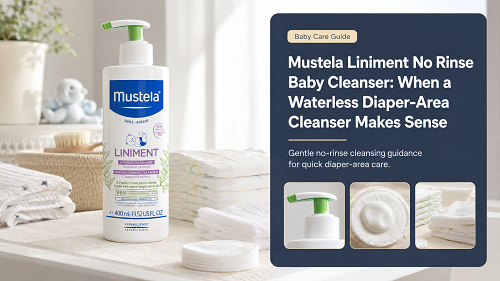
Mustela Liniment No Rinse Baby Cleanser is the product at the center of this guide. Mustela Liniment is a no-rinse diaper-area lotion based on a traditional water, olive oil, and calcium hydroxide formula. The manufacturer instructs users to shake it, apply it to a cotton pad or reusable wipe, cleanse the diaper area, and leave the product on without rinsing. The goal is not to label one formula as perfect for every baby, but to help parents compare ingredients, texture, routine fit, and signs that a product should be stopped.
It can be convenient for nighttime changes, travel, or families who prefer a wipe-free cleansing step followed by a fresh diaper. The thin residual film is part of the product’s intended use. Start with a small amount, keep the rest of the routine stable, and judge the baby’s skin over repeated use rather than one application.
Mustela Liniment No Rinse Baby Cleanser: What The Cleanser Is Designed To Do
The current Mustela formula is fragrance-free and features extra-virgin olive oil. Because it is meant to stay on the skin, parents should pay attention to how the diaper area feels after repeated use rather than evaluating only the first application.
The internal product page lets you compare this no-rinse baby cleansing lotion with the current size and listing before adding it to your changing station.
Texture, Fragrance, And Rinse-Off Performance
No-rinse products are useful when access to a sink is limited, but they do not remove the need for prompt diaper changes. Moisture, friction, stool, and prolonged contact remain important drivers of irritation.
A diaper change cleansing product should fit into a wider diaper routine that still prioritizes prompt changes, gentle cleaning, and protection from prolonged wetness.
Use a soft pad or cloth and wipe without scrubbing. If stool is difficult to remove, water can still be the gentlest practical option, particularly when the skin is already very sore.
The manufacturer’s instructions are the best reference for how this waterless infant cleanser is meant to be shaken, applied, and left on without rinsing.
Build A Short, Gentle Bath Routine
Wet the skin with comfortably lukewarm water, use the smallest useful amount of cleanser, and focus on areas that are visibly dirty, sweaty, or exposed to stool, food, sunscreen, or saliva. Avoid vigorous scrubbing and rinse until the skin no longer feels slippery.
When skin is already irritated, a gentle wipe alternative for babies should minimize rubbing; dermatology guidance also supports gentle cleaning with water and a soft cloth when needed.
Pat rather than rub with a soft towel. When the skin is dry or eczema-prone, apply an appropriate fragrance-free moisturizer soon after bathing. Product choice matters, but duration, water temperature, friction, and after-bath care often decide whether a routine feels comfortable.
A consistent newborn bottom cleansing routine is easier to troubleshoot when parents avoid changing the cleanser, diaper cream, wipes, and diaper brand all at once.
What Parents Should Compare Before Buying
Read the current package instead of relying on an old marketplace description. Formulas, fragrance choices, active ingredients, age directions, and warnings can change. Compare the complete label with the job you want the product to do.
| Decision Point | Current Position | Why It Matters |
|---|---|---|
| Format | No-rinse liniment | Convenient away from the bath |
| Key base | Water, olive oil, calcium hydroxide | Shake before use |
| Fragrance | Fragrance-free | Useful for simpler routines |
| Main role | Diaper-area cleansing | Not a substitute for medical rash care |
Keep liniment skincare for diaper changes separate from barrier-cream selection so you can tell which product is cleansing and which one is providing longer-lasting wetness protection.
For Mustela Liniment No Rinse Baby Cleanser, the most useful question is whether the formula solves a real routine problem without adding unnecessary steps. A product that is easy to apply, easy to stop, and easy to evaluate is often more practical than a complicated routine built around marketing claims.
A Practical First-Use Checklist
- Confirm the exact product, variant, age guidance, ingredient list, and warnings on the package.
- Introduce Mustela Liniment No Rinse Baby Cleanser without adding another new skincare product on the same day.
- Use a small amount on a limited area first when the child has sensitive or reactive skin.
- Follow the label for rinse-off versus leave-on use and keep products away from the eyes and mouth unless specifically intended there.
- Check the skin again later the same day and over the next several uses for redness, dryness, swelling, or discomfort.
- Stop and seek professional guidance when symptoms are severe, persistent, infected-looking, or associated with a baby who seems unwell.
Write down the date the product was started and keep the bottle or package until you know it is tolerated. This simple habit makes it easier to identify the likely trigger if several caregivers share the routine.
How To Decide If Mustela Liniment No Rinse Baby Cleanser Fits Your Routine
Choose this liniment when you want a simple no-rinse diaper-change cleanser and the baby tolerates the residual film. Keep water and a soft cloth as an alternative for messy changes or irritated skin, and separate cleansing from actual rash treatment.
Use the product according to its current label, observe the skin rather than the marketing, and keep the surrounding routine simple. That approach gives parents a clearer answer about whether Mustela Liniment No Rinse Baby Cleanser is comfortable and useful for their own baby.
Frequently Asked Questions
Do I have to rinse Mustela Liniment?
The manufacturer describes it as a no-rinse diaper-change lotion. Shake before use, apply to a soft pad, cleanse gently, and follow the current package directions.
Can liniment replace baby wipes?
It can be used with a cotton pad or reusable wipe as an alternative cleansing method. For very messy changes or sore skin, plain water may still be useful.
Does it prevent diaper rash?
It may leave a protective-feeling film, but no cleanser can guarantee rash prevention. Prompt changes, gentle cleaning, skin drying, and appropriate barrier care remain important.
Can I use it on broken or infected skin?
Avoid self-treating significant skin damage or suspected infection with a new cosmetic routine. Ask a pediatrician or dermatologist for guidance.
Is olive oil suitable for every baby?
Not every baby tolerates every ingredient. Stop use if irritation appears and seek advice if symptoms persist or worsen.
