A safe cradle cap care routine should focus on gentle washing, carefully loosening flakes, avoiding picking, and knowing when the scalp needs medical attention. Cradle cap commonly appears as white or yellow greasy scales on a baby’s scalp and is usually harmless, but similar-looking redness or scaling may have another cause.
The condition is generally not considered painful or contagious and often improves over time. Parents should still arrange professional advice when the scalp bleeds, leaks fluid, becomes swollen, spreads widely, or fails to improve.
What Baby Cradle Cap Looks Like
Baby cradle cap may appear as:
- White, cream, yellow, or brownish scales
- Greasy or crusted patches
- Fine newborn scalp flakes
- Scaling around the hairline
- Mild scaling near the eyebrows or ears
- Temporary hair shedding when loose scales come away
The skin underneath may look different depending on the baby’s natural skin tone. It should not be aggressively scrubbed to make it look clear faster.
Cradle cap is not caused by poor hygiene. Washing too harshly or picking at the flakes can irritate the skin and increase the risk of broken areas.
| What parents notice | Possible concern | Recommended response |
| Greasy yellow or white scales without obvious discomfort | Typical cradle cap may be possible | Try gentle washing and soft brushing |
| Fine dry flakes without thick crusts | Infant scalp dryness may be possible | Use a simple scalp routine and monitor |
| Intense itching or disturbed sleep | Eczema or another condition may be possible | Contact a pediatric professional |
| Ring-shaped patches or broken hairs | A different scalp condition may be possible | Seek medical assessment |
A Step-by-Step Cradle Cap Care Routine
Soften the scales gently
A healthcare professional or pharmacist may suggest an appropriate emollient for loosening thick scales. Use only a small amount and follow the directions.
The NHS advises against picking crusts and specifically advises avoiding olive oil and peanut oil for cradle cap. Its guidance supports gentle use of a suitable emollient or coconut oil, followed by soft brushing and washing with baby shampoo.
Massage without scratching
Use clean fingertips to massage the scalp lightly. Fingernails should not scrape the skin. Stop if the scalp becomes red, painful-looking, or broken.
Use a soft baby brush
Brush only after the scales has softened. Use slow strokes and do not try to remove every flake in one session.
Wash with an age-appropriate cleanser
Rinse away loosened scales and any product used to soften them. Leaving heavy oil on the scalp may allow buildup to continue.
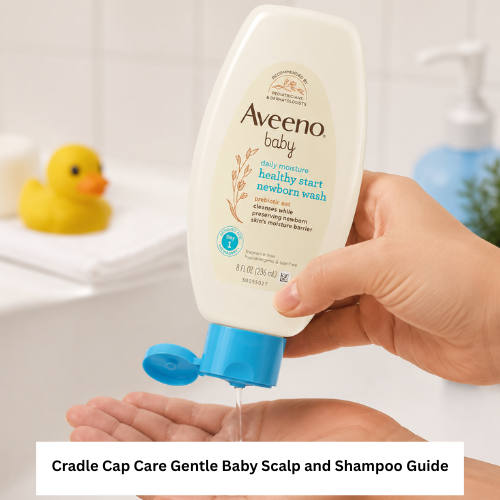
A mild gentle oat baby wash may be useful for routine cleansing, but verify that the label permits use on the scalp and near a baby’s eyes.
Mayo Clinic guidance also recommends gentle scalp rubbing, baby shampoo, and a soft brush. It advises speaking with a healthcare professional before using medicated cortisone, antifungal, or dandruff products on a baby.
Dry the scalp carefully
Pat the hair and scalp dry with a clean, soft towel. Avoid vigorous rubbing and make sure the baby remains comfortably warm.
Choosing a Cradle Cap Shampoo or Scalp Product
A cradle cap shampoo should have clear age guidance, eye-safety directions, contact-time instructions, and a complete ingredient list. Do not assume that a product marketed for dandruff, seborrheic dermatitis, or adults is safe for an infant.
Check whether the formula:
- Is intended for babies
- Is rinse-off or leave-on
- Contains fragrance or essential oils
- Has medicated active ingredients
- Requires professional supervision
- use near the eyes
- Has a stated frequency of use
- Needs a patch or tolerance check
- Has a secure cap and tamper-evident seal
Parents comparing specialized options can review a seborrheic dermatitis care product listing, but condition-specific products should use on a baby without checking age directions and asking a healthcare professional.
Using Oils Safely in Baby Scalp Care
Not every baby hair care oil is appropriate for cradle cap. The word organic, natural, herbal, or cold-pressed does not establish that a product is suitable for an inflamed infant scalp.
A baby hair oil should treated as an automatic cradle cap remedy; check the ingredients, age directions, and pediatric guidance first.
An organic cold-pressed baby hair oil may still contain botanical ingredients that can irritate sensitive skin, so natural does not mean risk-free.
A coconut baby oil for hair and skin considered when the label supports infant use and a healthcare professional agrees it fits the scalp condition.
Parents comparing Blue Nectar baby hair oil should review the full formula and avoid applying any oil to broken, bleeding, swollen, or infected-looking skin.
Keep oils away from the baby’s mouth and hands. Clean spilled oil immediately because it can make changing tables, bathroom floors, and caregivers’ hands slippery.
How Often Should the Scalp Be Washed?
Frequency depends on the baby, product directions, and professional advice. Some guidance suggests regular washing during active scaling and reducing the frequency once the scalp clears.
More washing is not always better. Repeated cleansing with a strong formula can increase dryness or irritation. Use the smallest effective routine and monitor the response.
Do not leave a softening product on longer than directed. Oils and ointments should normally be wash out thoroughly when used for loosening scales.
Conclusion
Effective cradle cap care should remain gentle, simple, and appropriate for the baby’s age. Parents can soften scales carefully, wash them away with a suitable cleanser, use a soft brush, and avoid picking or unapproved medicated products. Baby skin care can help families compare scalp products, but bleeding, swelling, leaking fluid, widespread scaling, or persistent symptoms assessed by a healthcare professional.
FAQ
Is cradle cap caused by poor hygiene?
No. It is not considered a result of poor hygiene and caught from another baby.
Can I pick the scales off?
No. Picking can damage the skin and increase the risk of irritation or infection.
Can I use adult dandruff shampoo?
Do not use it unless a healthcare professional specifically recommends an appropriate product and directions for the baby.
Is oil safe for loosening cradle cap?
Some suitable emollients or oils advised, but not every oil is appropriate. Check the label and ask a healthcare professional.
When should a doctor see the baby’s scalp?
Arrange advice for bleeding, leaking fluid, swelling, widespread scaling, significant discomfort, or symptoms that do not improve.
