
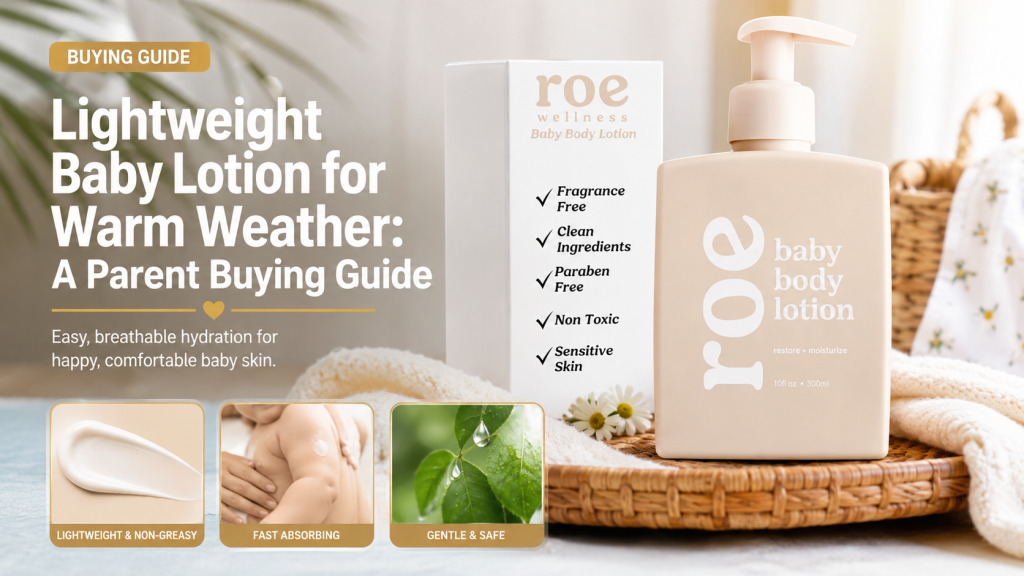
A lightweight baby lotion can make warm-weather moisturizing easier because it spreads quickly and leaves less residue under clothing. The challenge is finding a formula that feels light without disappearing so fast that dry areas remain uncomfortable. Climate, air conditioning, bathing frequency, and skin sensitivity all affect the choice.
Parents should judge the product after it has fully absorbed, not only during the first few seconds. A lotion can feel silky at application yet become sticky in humidity, while another may dry quickly but lack enough emollients for elbows, knees, or cheeks.
What Makes A Lightweight Baby Lotion Practical
Lightweight describes sensory feel, not a regulated safety category. Water content, humectants, emollients, thickeners, and silicones all influence slip and absorption. Two lotions with similar marketing claims can behave very differently once applied in heat or humidity.
The most useful test is a small, label-directed amount on clean skin. Observe whether clothing sticks, whether the lotion pills, and whether the skin remains comfortable later. A product that needs repeated heavy layers may not be the right warm-weather texture.
Warm Weather Features Worth Checking
A good summer formula balances comfort, hydration, hygiene, and easy application during a busy routine.
Fast Spread With Low Friction
A fluid lotion should cover a wide area without repeated rubbing. This is especially useful after bathing when the baby may be warm, restless, or ready to dress.
Dispense a small amount, warm it between clean hands, and press or glide gently. More product can increase tackiness without improving comfort.
Comfortable Finish Under Clothing
A non-sticky finish reduces the chance that fabric, lint, or sand will cling to the skin. It also makes it easier to dress the baby soon after application.
Wait a few minutes before clothing and check folds where heat and moisture collect. Avoid applying thick lotion inside irritated skin folds unless directed.
Adequate Moisture Despite A Light Feel
A light formula can still include effective humectants and emollients. The goal is comfortable skin, not the absence of every trace of product.
If cheeks or knees remain rough, use a richer age-appropriate moisturizer only on those areas rather than coating the entire body heavily.
Pump Packaging And Clean Use
A pump offers controlled dispensing and limits contact with the remaining lotion. Travel locks and leak-resistant caps are useful for bags and changing stations.
Store the bottle away from direct sun and high heat. Do not leave it in a hot car or add water to improve flow.
Minimal Added Scent
Fragrance can become more noticeable in heat and may be irritating for sensitive skin. Botanical scents are still fragrance even when described as natural.
Choose clearly labelled fragrance-free options when the baby has reactive skin or when several scented products are already used in the routine.
Warm Weather Comparisons To Make One At A Time
A summer baby moisturizer should be evaluated for spread, residue, packaging, and how the skin feels after the product has fully dried.
A non-greasy baby lotion may be easier under light clothing, but parents should still check fragrance and the complete ingredient list.
A fast-absorbing lotion is most useful when it remains comfortable later instead of requiring repeated application every hour.
A broader warm weather skincare plan should separate moisturizer from sun-protection decisions and follow age-appropriate shade and clothing guidance.
The AAD explains general approaches to gentle hydration including mild cleansing, short baths, and moisturizer applied without harsh rubbing.
A baby lotion for humidity should be tested under the baby’s normal clothing and room conditions because humidity changes how residue feels.
Light Texture Buying Checklist
Use these observations after a normal application rather than judging only the front label.
| Feature | Good Sign | Reason To Reconsider |
|---|---|---|
| Spread | Covers skin with gentle motion | Requires pulling or vigorous rubbing |
| Absorption | Settles within a few minutes | Remains very sticky under clothing |
| Hydration | Skin stays soft and comfortable | Dryness returns immediately |
| Fragrance | None or very mild when fragrance-free is preferred | Strong scent or irritation |
| Packaging | Clean pump and intact seal | Leaking cap or damaged container |
Build A Simple Warm Weather Routine
Keep the routine short so heat, sweat, clothing, and product changes are easier to separate.
- Use lukewarm rather than hot bath water.
- Pat the skin dry without vigorous towel rubbing.
- Apply a small label-directed amount to slightly damp or dry skin as instructed.
- Allow the lotion to settle before dressing.
- Check folds, cheeks, elbows, and knees separately for different moisture needs.
- Store the bottle in a cool, dry location and clean residue from the pump.
If the baby becomes sweaty, avoid repeatedly layering lotion over damp skin. Clean and dry the area gently, then follow the product directions or professional advice.
Prioritize Comfort After The Lotion Dries
A lightweight baby lotion works well in warm weather when it spreads gently, absorbs predictably, and leaves enough moisture without a heavy film. Packaging, fragrance, and storage matter as much as initial slip.
Use one product at a time, apply only the needed amount, and reserve richer textures for dry patches. The best formula is the one that keeps the baby comfortable in the real climate and routine.
Frequently Asked Questions
Can babies use lotion in hot weather?
Yes, when the product is age appropriate and needed. Use a small amount, avoid irritated folds, and follow the label.
Does lightweight mean oil-free?
No. A light-feeling lotion may still contain emollient oils, esters, silicones, or fatty alcohols. Texture depends on the whole formula.
Why does lotion feel sticky in humidity?
Moist air, sweat, application amount, clothing, and humectants can affect residue. Try a smaller amount and allow it to absorb before dressing.
Should I refrigerate baby lotion?
Only if the manufacturer specifically instructs it. Most products should be stored at normal room temperature away from heat and direct sunlight.
Can I use a richer cream on dry cheeks?
Often yes when the label permits, but introduce it separately and avoid the eye and mouth area unless directions allow facial use.
